

Emergency lighting comes in two main types: maintained and non-maintained. Maintained fixtures stay on all the time, and a backup battery keeps them lit during a power failure. Non-maintained fixtures remain off during normal power and turn on only when the power fails. Both types use a backup battery and serve the same safety purpose. The key difference lies in when the light operates. Maintained units provide continuous illumination, while non-maintained units activate only during an outage. This distinction shapes how each type fits different spaces and usage needs.
Maintained emergency lights stay on all the time, providing continuous light and backup during power failures.
Non-maintained emergency lights stay off normally and turn on only when power fails, saving energy and battery life.
Both types keep you safe by lighting escape routes for at least 90 minutes during an outage.
Choose maintained lights for busy places like theaters and hallways that need constant light.
Choose non-maintained lights for low-traffic areas like offices and storage rooms to save energy.

The answer to the title question is straightforward. Emergency lighting comes in two types: maintained and non-maintained. These two categories cover how fixtures behave during normal power conditions and during an outage. Each type serves the same safety goal, but they operate on different principles.
A maintained emergency light stays on all the time. It receives power from the main electrical supply during normal conditions. The fixture also connects to a backup battery. When the main power fails, the battery takes over and keeps the light on without interruption. This design means the fixture acts as both a regular light source and an emergency light source.
The British Standard BS 5266 outlines key traits for maintained fixtures. They remain on during normal conditions and continue to operate on battery backup during an emergency. They consume more energy because the lamp runs continuously. Their batteries cycle more often, which can shorten battery life compared to other designs. Maintained fixtures require both a permanent live wire and a switched live wire for proper installation. BS 5266 specifically requires maintained lighting in cinemas and theaters. This rule prevents sudden darkness in spaces where people gather in large numbers.
Under UL 924, maintained luminaires must meet specific control requirements. When using 0-10V controls, the inverter passes through the dimming signal during normal power. On power failure, the inverter generates AC from the battery and drives fixtures to a predetermined emergency level. A UL 924 override takes priority and guarantees light for 90 minutes. This ensures the fixture delivers code-required output even when the regular power signal disappears.
A non-maintained emergency light works differently. It stays off during normal power conditions. The fixture draws only a small trickle charge to keep its battery ready. When the main power fails, the fixture activates and runs on battery power. This design suits spaces that already have adequate normal lighting.
BS 5266 notes that non-maintained fixtures consume less energy because the lamp remains off during normal conditions. Their batteries last longer since they discharge only during tests or actual failures. They cost less upfront and operationally. Installation requires only a permanent live wire for charging. BS 5266 accepts non-maintained lighting in most offices, but the fixtures must cover escape routes and fire alarm call points.
The IBC sets a clear runtime standard for non-maintained lights. IBC §2702.2.3 mandates that emergency lighting, including non-maintained types, must remain illuminated for a minimum of 90 minutes after loss of normal power. It must provide at least 1 footcandle along egress paths.
Emergency lighting also includes exit signs, which mark escape routes. These signs may operate as maintained or non-maintained units. The two main types remain the focus here. Both maintained and non-maintained fixtures can comply with BS 5266 when correctly specified. The choice depends on the space and how people use it.
Maintained fixtures serve spaces where people expect light at all times. Movie theaters, shopping malls, office buildings, airports, convention halls, hospitals, high-rise buildings, hotels, and schools all rely on continuous illumination. These environments cannot afford sudden darkness during normal operations. Building codes reinforce this requirement for certain occupancies. Assembly Group A covers spaces where people gather for social, civic, religious, dining, or entertainment purposes. Examples include movie theaters, nightclubs, casinos, and stadiums.
Building codes also require luminous egress path markings that clearly identify exit paths in high-rise buildings for certain use and occupancies, including Assembly Group A.
Hospitals present a special case. Hospitals require battery-powered emergency lighting to ensure uninterrupted illumination during critical patient care activities. Patient care areas need continuous light because hospitals operate around the clock. Corridors, stairwells, and ramps must maintain adequate emergency lighting to prevent accidents during evacuations.
The always-on design delivers two functions from one fixture. The unit provides routine visibility during normal conditions. It also serves as an emergency light source when the main power fails. This dual purpose reduces the total number of fixtures a facility needs. Occupants never face a sudden transition from light to darkness.
Maintained fixtures come in two power configurations. Self-contained units carry individual batteries within each fixture. Central battery systems draw power from one large battery bank. Each approach has tradeoffs. Self-contained units require testing hundreds of individual batteries. Central systems need only one battery bank with centralized monitoring. Self-contained batteries last 3 to 5 years and remain heat-sensitive. Central battery systems use valve-regulated lead-acid batteries that last 8 to 10 years in a controlled environment. Large facilities such as airports, hospitals, and malls often choose central systems for lower long-term maintenance effort.
Non-maintained fixtures suit spaces where lights stay off during normal hours. Offices, classrooms, and storage rooms fit this pattern well. These areas have regular lighting for daily tasks. Workers and students do not need emergency fixtures to run all the time. The non-maintained unit waits in standby mode. It draws a small charge to keep its battery ready. This approach saves energy and extends battery life. Building owners also spend less on electricity over time.
Warehouses and utility closets follow the same logic. These spaces often sit empty for long periods. A light that runs constantly would waste power. A non-maintained fixture stays dark until it is needed. This makes it a practical choice for low-traffic areas. The fixture only activates when the main power source fails.
A non-maintained fixture remains dark during normal conditions. It does not provide routine illumination. When the main power source fails, the fixture switches to battery power. The light turns on and illuminates the space. This immediate activation helps occupants see their surroundings. It also reduces confusion during an emergency.
Non-maintained fixtures often pair with exit signs to guide occupants toward exits. Well-lit exit signs working together with dependable emergency lighting give building occupants obvious guidance toward escape routes. This supports fast and orderly evacuation. Emergency and exit lighting reduce confusion during emergencies. They provide illumination when occupants may feel afraid. They create additional time, lower panic, and help reduce injuries during evacuations.
Escape route lighting illuminates paths such as stairways, corridors, and exits. It maintains clear visibility and helps people move safely toward designated emergency exits. This supports efficient evacuation during emergencies. The system must turn on immediately when normal lighting fails. A non-maintained fixture meets this need by activating the moment power drops.
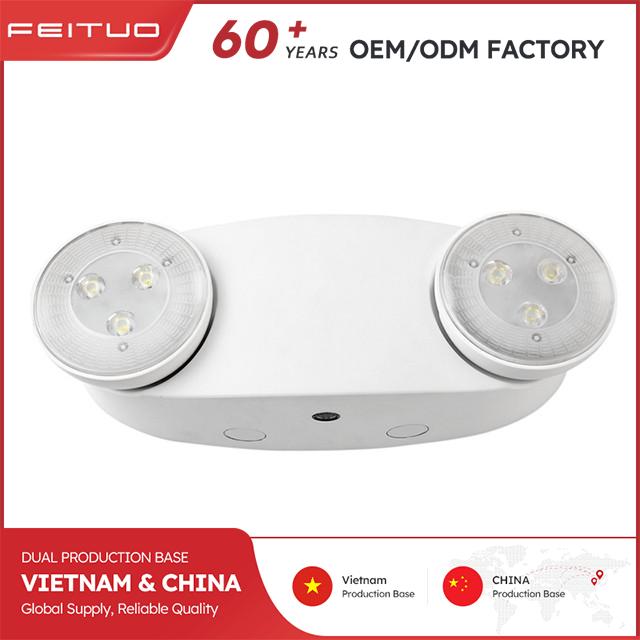
Understanding the difference between maintained and non-maintained emergency lighting requires looking at their behavior during normal power and during a power failure. Each type serves the same safety goal, but they operate on different principles. Both rely on a backup battery to deliver illumination when the main power source fails.
A maintained fixture operates constantly. The lamp stays on all the time, functioning as a standard light source. During normal power, the fixture draws energy from the building’s main electrical supply. A maintained fixture requires two live feeds for wiring. A permanent live keeps the battery charged and monitors the mains. A switched live allows normal on/off control via a wall switch.
Non-maintained fixtures behave differently. The lamp remains off during normal power conditions. The fixture draws only a small trickle charge to keep its battery ready for an outage. Wiring is simpler. A non-maintained fixture requires only a single permanent live feed. This feed keeps the battery topped up and monitors the mains.
The operational state affects energy use. Maintained fixtures consume energy continuously because the lamp runs at all times. This makes them suitable for high-traffic public areas. Examples include busy hallways, stairwells, and lobbies. These spaces require continuous illumination. Non-maintained fixtures use significantly less energy during normal operation. The lamp stays off. This makes them ideal for areas that are not usually occupied. Storage closets, electrical rooms, and boiler rooms benefit from this design. Occupants in these spaces typically know the evacuation routes already.
During a power failure, both types of emergency lighting activate to support safe evacuation. The transition method differs between the two. A maintained fixture simply switches its power source from the mains to its internal battery backup. Because the lamp stays on continuously, the transition is seamless. Occupants do not notice any change in illumination.
A non-maintained fixture must switch on and draw power from the battery backup simultaneously. The fixture detects the loss of main power. It activates the lamp instantly. This activation must be rapid enough to meet required brightness levels at the very start of the outage.
For healthcare facilities, specific minimum illumination standards apply during a power failure. At the initial stage, the space must have an average illumination of 1 foot-candle. The minimum illumination at any point cannot drop below 0.1 foot-candle. After 90 minutes of operation, the average illumination can decrease to 0.6 foot-candle. However, the minimum must not fall below 0.06 foot-candle. Both maintained and non-maintained fixtures must deliver these levels to ensure safe egress.
The final choice between the two types depends on several factors. Building layout, occupant familiarity with the facility, local building codes, and existing electrical infrastructure all play a role. In large public areas where occupants may not know escape routes, maintained fixtures provide constant guidance. In areas with low occupancy, non-maintained fixtures save energy while still providing dedicated emergency function.
Emergency lighting fixtures are available in both maintained and non-maintained configurations, offering reliable performance and compliance with safety standards such as UL 924. These fixtures provide at least 90 minutes of runtime as required by code.
Emergency lighting falls into two categories: maintained and non-maintained. Maintained fixtures stay on throughout normal operations and continue operating during power failures. Non-maintained fixtures stay off until the main power supply fails, then activate automatically. This single difference defines how each type serves its environment.
Choosing the right option depends on the space and how occupants use it. Maintained units suit theaters, hallways, and assembly areas needing constant illumination. Non-maintained units fit offices, classrooms, and storage rooms where lights remain off normally. Both designs comply with safety codes and protect building occupants during emergencies. The correct choice ensures occupants can exit safely and without confusion.
Maintained lighting stays on all the time, even during normal power. Non-maintained lighting remains off during normal power and turns on only when the power fails. This single difference determines their applications and energy use.
Emergency lighting must operate for at least 90 minutes after a power failure. This standard comes from the International Building Code and NFPA 101. Fixtures must provide adequate illumination along egress paths throughout this period.
Non-maintained lighting consumes less energy because its lamp stays off during normal power. The fixture only draws a small charge to keep its battery ready. This design makes it ideal for storage rooms and offices.
Emergency lighting fixtures typically use rechargeable batteries that provide at least 90 minutes of runtime during a power failure. They offer reliable performance and comply with safety standards such as UL 924.




Phone: 0086-13566557272
Whatsapp: +86-13566557272
ADD: No.546 Qiye Road, Zhouxiang Town, Cixi, Zhejiang, China
ADD: Within Dinh Vu - Cat Hai Economic Zone, Dong Hai 2 Ward, Hai An District, Hai Phong City, Viet Nam
Customer Message


 Dual Head Emergency Light
 LED Emergency Light Remote Head
 Twin Spot Emergency Light
 Rechargeable LED Emergency Light
 Emergency Downlight
 Fire Exit Sign
 Running Man Exit Sign
 SALIDA Exit Signs
 SAÍDA Exit Signs
 Recessed Exit Sign
 UL Listed Exit Light
 Customized EXIT SIGN
 Power & Lighting Exit Sign
 Mounting & Housing Exit Sign
 Self Test Exit Sign
  Directional exit sign
 Custom Legends exit sign
 Custom Acrylic Signs
 LED Emergency Inverter
 Emergency Ballast
 Emergency Battery