

How do you choose the right twin spot emergency lighting for your project? Match the light's specifications—lumen output, IP rating, battery runtime, and compliance—to your environment and regulatory needs. This guide covers coverage and beam angle, environmental protection, battery and compliance, and application-specific needs. Evaluate your ceiling height and throw distance first. Higher ceilings need narrower beam angles for effective light distribution. Then, consider the IP rating for your space. An IP65 rating works for both indoor and outdoor use. Compare battery runtime and compliance standards next. Look for certifications like UL 924. Finally, select the model that fits your application. The right twin spot emergency lighting ensures safety, efficiency, and cost-effectiveness. These steps provide a clear path to your decision.
Match the beam angle to your ceiling height for effective light distribution.
Choose an IP65 rating for reliable protection against dust and water.
Select LiFePO4 batteries for long life and consistent performance.
Verify certifications like IEC60598-2-22 to ensure safety and compliance.
Tailor lumen output to your specific application for optimal visibility.
Ceiling height drives your beam angle decision more than any other factor. You need to understand this relationship before you select any twin spot emergency lighting. A narrow beam angle concentrates light over a longer distance. A wide beam angle spreads light across a broader area but loses intensity quickly. Higher ceilings demand narrower angles. Lower ceilings allow wider angles. This principle shapes every installation you plan.
Throw distance describes how far light travels from the fixture before it becomes too dim to guide people safely. You must match this distance to your ceiling height. Think of a flashlight beam. Point it straight down from a tall ladder, and the spot stays tight and bright. Point it from a low step stool, and the same beam spreads wide but weakens fast. Emergency lighting behaves the same way.
Consider a practical example. A lower ceiling works well with a wide beam angle to cover a generous floor area while maintaining adequate brightness for an escape route. A higher ceiling requires a narrower beam angle to deliver usable illumination at ground level. This tighter beam travels farther and provides adequate light at the floor.
You should measure your actual ceiling height before making any purchase. Walk through the space with a tape measure. Note the highest points, especially in stairwells or atriums. These locations often require the narrowest angles. Also consider mounting position. Wall-mounted units at typical heights behave differently than ceiling-mounted units at higher positions. Your mounting height, not just the building height, determines the effective throw distance.
Spacing between fixtures matters just as much as beam angle. You want continuous visibility along the entire egress path. Dark gaps between light pools create confusion during an emergency. People hesitate when they cannot see the next step clearly. Proper spacing eliminates these dangerous zones.
For standard corridors, place your fixtures at distances that ensure overlapping coverage. This spacing works well with typical beam angles and ceiling heights. You can adjust based on your specific measurements. A corridor with a lower ceiling and wide beams might allow wider spacing. A warehouse aisle with a high ceiling and narrow beams might require tighter spacing.
You should also consider the width of your corridor. Wide hallways need more fixtures or wider beam angles to cover the full floor surface. Narrow corridors allow wider spacing because the walls help reflect and contain the light. Test your layout before final installation. Turn on the system and walk the entire path. Mark any dark spots you find. Adjust fixture positions until you achieve uniform coverage.
Remember that emergency lighting serves one primary purpose. It must clearly illuminate the path to safety. Every calculation you make should support that goal. Take accurate measurements. Choose beam angles that match your ceiling heights. Space fixtures to eliminate shadows. These steps ensure your twin spot emergency lighting performs when you need it most. A well-planned layout protects building occupants and satisfies inspection requirements.
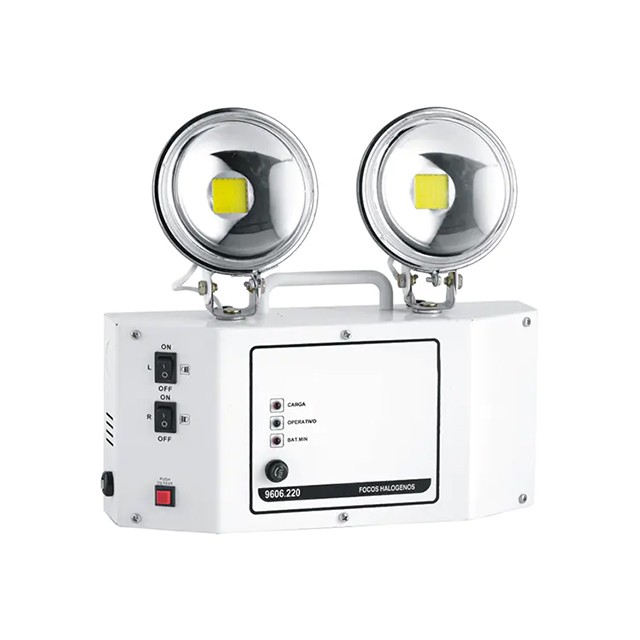
The IP rating tells you how well a fixture resists dust and water. This number matters more than almost any other specification. Choose the wrong rating, and your emergency light may fail exactly when you need it most. You must match the protection level to the real conditions of your installation site.
IP65 means the housing is dust-tight and protected against water jets from any direction. This rating suits both indoor corridors and outdoor installations. You can install an IP65 fixture in a stairwell, an underground parking garage, or a building entrance exposed to weather. The protection works the same in every location.
The difference between IP65 and lower ratings becomes clear when you compare them side by side.
Attribute | IP65 (Waterproof) | IP54 (Water-Resistant) |
|---|---|---|
Protection Level | Withstands water jets from all angles, heavy rain, and hose-down cleaning | Resists only light splashes and dampness, not continuous water or pressure |
Structural Design | Fully sealed housing with continuous gaskets and waterproof cable glands | Partial sealing with single gasket; gaps can form over time |
Weather Resistance | Handles condensation, pressure changes, airborne salt, and UV exposure | May show condensation or corrosion within 6–12 months outdoors |
Cleaning & Maintenance | Can be hosed or jet-washed safely | Must be wiped clean; cannot withstand pressure washing |
Suitable Installation | Exposed outdoor areas, parking areas, coastal environments | Semi-sheltered or indoor spaces with occasional moisture only |
For your twin spot emergency lighting, IP65 provides the safety margin you need. A lower rating might save money initially, but replacement costs will exceed those savings quickly.
Rule of thumb: If wind-driven rain or wash-down can reach the fixture, specify wet-location. High IP ratings such as IP65 indicate dust-tight protection against water jets, making them suitable for parking garage breezeways exposed to wind-blown rain.
The housing material determines how long your fixture survives harsh conditions. Polycarbonate offers exceptional impact resistance, measuring 12-16 ft-lb/in in Izod notched tests. This strength protects the internal components from accidental bumps, vandalism, and falling debris.
Temperature performance matters equally. Polycarbonate maintains structural integrity from -60°C to approximately 120°C. The glass transition temperature sits around 145-150°C, marking where the material shifts from rigid to flexible. Your emergency light operates reliably across this wide range.
Polycarbonate delivers impact resistance up to 250 times stronger than glass while maintaining optical clarity.
The coefficient of thermal expansion (65-70×10⁻⁶/°C) exceeds glass by 5-7 times, so flexible mounting systems accommodate seasonal dimensional changes.
With proper UV stabilization, materials retain over 90-95% of original impact resistance after 10-15 years in temperate climates.
Twin spot emergency lights with IP65-rated polycarbonate housing are designed to operate reliably across a wide temperature range. This combination handles freezing winters, hot summers, and everything between. You can install these fixtures in corridors, stairwells, and underground parking lots with confidence. The durable construction ensures your emergency lighting system remains functional for years, regardless of your local climate.
The battery inside your emergency light determines how long it protects people during an outage. You need a battery that delivers reliable power when the grid fails. You also need one that lasts for years without constant attention. The chemistry you choose affects both performance and total cost over the fixture's lifetime.
LiFePO4 batteries stand apart from older lead-acid options. They handle over 2000 charge-discharge cycles without significant degradation. Lead-acid batteries typically have a much shorter cycle life. This difference translates directly into replacement savings for your project.
The safety profile of LiFePO4 chemistry also matters. Built-in protection prevents overcharging, over-discharge, and short circuits. The stable chemistry reduces the risk of thermal runaway. Lead-acid batteries carry higher risks of leakage and gas emission. For emergency lighting, this safety margin protects both the equipment and the people nearby.
LiFePO4 batteries deliver consistent power throughout their discharge cycle. They maintain voltage levels better than lead-acid under load. They also weigh less and require zero maintenance. You install them once and forget about them. The environmental benefit adds another advantage. LiFePO4 chemistry aligns with modern sustainability goals.
The rated lifespan of LiFePO4 batteries typically reaches 2,000 to 6,000 cycles. Under moderate depth of discharge and temperature control, this corresponds to about 8–15 years of service. Emergency lighting applications fit perfectly within these operating conditions. Your twin spot emergency lighting can function reliably for over a decade with this battery technology.
Discharge times vary by model. Look for models that provide sufficient runtime to meet your building's evacuation requirements. Many models offer extended discharge times to ensure people have ample time to evacuate safely during prolonged outages.
Certifications protect you from substandard products. They verify that a fixture meets recognized safety and quality benchmarks. You should always check for compliance marks before purchasing emergency lighting.
UL 924 certification covers luminaires for emergency lighting. This standard tests performance under simulated emergency conditions. It verifies that the fixture activates automatically during power failure. It also confirms that light output meets minimum requirements for escape route illumination.
Look for products with UL 924 certification. These marks confirm the product meets international safety standards. You can specify such fixtures with confidence for any commercial or industrial project. The combination of certified safety and long-life battery technology makes them a dependable choice for your emergency lighting needs.
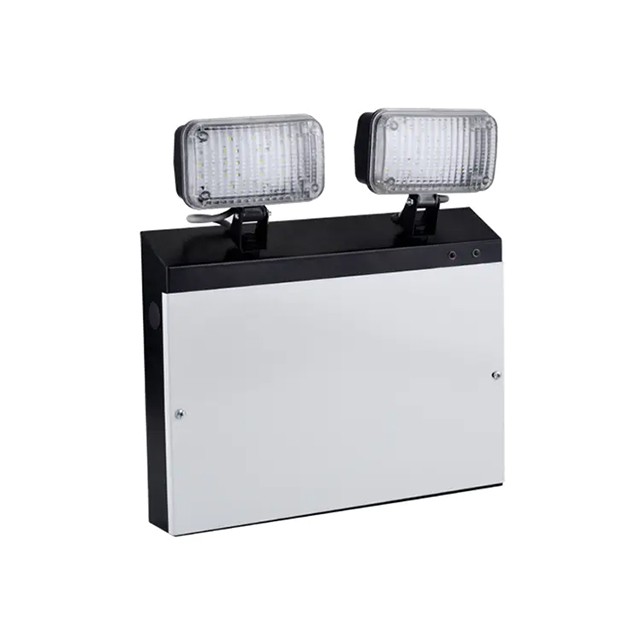
Every building has unique emergency lighting demands. A warehouse operates differently from an office tower. The layout, ceiling height, and evacuation routes all shape your fixture selection. You must match the light output to the space you need to protect. This section breaks down the decision process for two common application types.
Warehouses present some of the most demanding conditions for emergency lighting. High ceilings, wide aisles, and large floor areas require powerful fixtures. You need lights that can throw a strong beam across substantial distances. The right lumen output makes the difference between a visible escape path and a dangerous blackout.
Ceiling height drives your lumen requirements in industrial spaces. High-bay zones with ceilings greater than 20 feet demand high-lumen twin spot emergency lighting with 1200–2000 lumens. These powerful fixtures cut through the darkness and illuminate the floor clearly. Standard low-lumen units simply cannot reach that far. They waste energy and leave critical areas unlit.
Consider the layout of a typical distribution center. Racking systems create narrow aisles that run for hundreds of feet. Forklifts and pallet jacks move through these corridors constantly. During a power failure, workers need to see the floor, the aisle edges, and the exit signs. A 2000-lumen fixture mounted on a column or wall can cover a substantial portion of that path. You should place these units at regular intervals along main travel routes.
Industrial environments also bring dust, moisture, and temperature extremes. Your fixtures must withstand these conditions without failing. The IP65-rated housing handles dust and water jets effectively. The polycarbonate construction resists impacts from equipment and debris. You can install these lights in loading docks, manufacturing floors, and storage areas with confidence.
Battery runtime matters more in large facilities. Workers may need several minutes to reach exits from deep inside the building. Choose models with sufficient emergency runtime to allow complete evacuation.
Office buildings and commercial spaces follow different rules. Corridors, stairwells, and open-plan areas each have specific illumination needs. The building code specifies emergency lighting requirements in terms of illumination intensity rather than lumen output. For office corridors, the code mandates a minimum of 1 foot-candle of illumination at floor level, measured across the entire exit path. This is the applicable standard for emergency egress lighting in this context.
You need to translate this requirement into practical fixture selection. Models with adjustable twin spots work well for most office corridors. The adjustable heads let you direct light exactly where you need it. You can aim one spot down the corridor and angle the other toward a stairwell door or exit sign. This focused coverage ensures the entire escape route meets the 1 foot-candle minimum.
Office environments typically have lower ceilings than warehouses, allowing wider beam angles. You can space fixtures further apart while maintaining uniform coverage. You should still walk the route after installation to verify illumination levels meet code requirements.
Commercial spaces like retail stores and restaurants have their own considerations. Open floor plans with display racks and seating areas create unique shadow patterns. You may need additional fixtures to ensure clear sightlines to exits. The adjustable twin spots help you aim light around obstacles and highlight the safest path.
Variety of models are available to meet diverse needs, with options for customization. You can select the exact lumen output, battery capacity, and housing color that matches your project specifications. This flexibility ensures your emergency lighting system aligns perfectly with your building's layout and your client's requirements. Whether you need high-lumen units for a warehouse or compact fixtures for an office, you can find a solution that fits.
You now have a clear path forward. Measure your ceiling height first. Select the beam angle that matches your throw distance. Match the IP rating to your environment's moisture and dust levels. Compare battery runtimes and verify certifications like UL 924. Finally, choose the lumen output that fits your space.
Never skip these steps. Each factor works together to keep people safe during an outage. A weak battery or wrong IP rating can render your entire system useless.
Use these guidelines when you evaluate your options. Look for products with IP65 housing, LiFePO4 batteries, and certified compliance for dependable performance when you need it most.
Measure your ceiling height first. Lower ceilings work well with wide beam angles, while higher ceilings require narrower beam angles. The narrower angle throws light farther, ensuring adequate illumination reaches the floor level where people walk.
Yes. IP65 rating means the housing resists dust and water jets from any direction. This protection suits exposed locations like building entrances, parking garages, and covered walkways. The polycarbonate housing also withstands impacts and temperature variations typical of outdoor environments.
Look for models that provide sufficient runtime to meet evacuation requirements. LiFePO4 batteries provide consistent power throughout the discharge cycle and last for thousands of charge cycles without replacement.
Check for UL 924 certification, which verifies performance under simulated emergency conditions. These certifications ensure your lighting meets international safety standards.

Phone: 0086-13566557272
Whatsapp: +86-13566557272
ADD: No.546 Qiye Road, Zhouxiang Town, Cixi, Zhejiang, China
ADD: Within Dinh Vu - Cat Hai Economic Zone, Dong Hai 2 Ward, Hai An District, Hai Phong City, Viet Nam
Customer Message


 Dual Head Emergency Light
 LED Emergency Light Remote Head
 Twin Spot Emergency Light
 Rechargeable LED Emergency Light
 Emergency Downlight
 Fire Exit Sign
 Running Man Exit Sign
 SALIDA Exit Signs
 SAÍDA Exit Signs
 Recessed Exit Sign
 UL Listed Exit Light
 Customized EXIT SIGN
 Power & Lighting Exit Sign
 Mounting & Housing Exit Sign
 Self Test Exit Sign
  Directional exit sign
 Custom Legends exit sign
 Custom Acrylic Signs
 LED Emergency Inverter
 Emergency Ballast
 Emergency Battery


