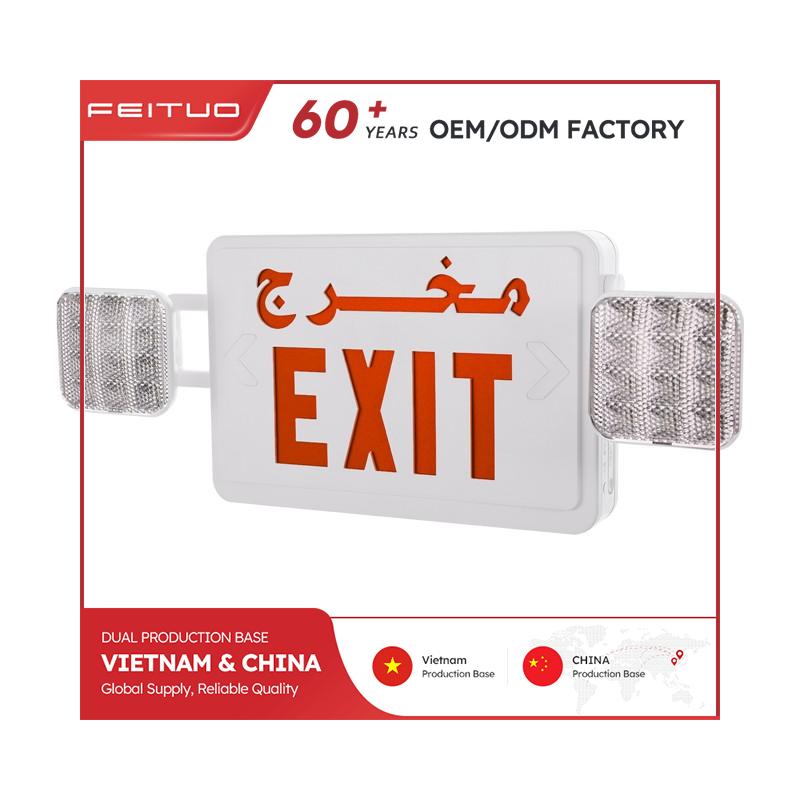
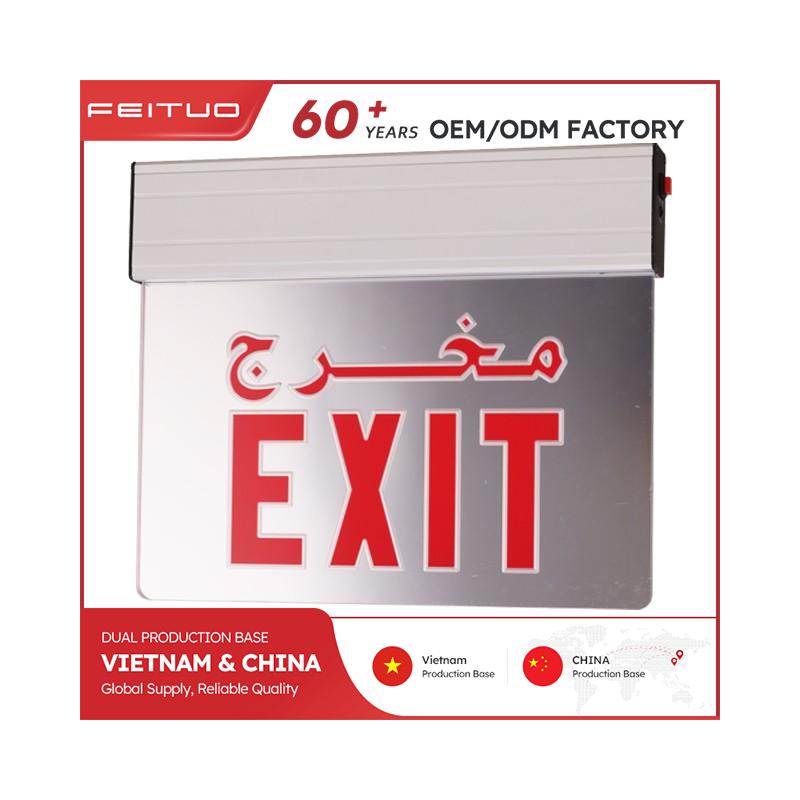
In a sudden blackout, which signs in your building will still light the way to safety? This question carries life-or-death weight. A standard exit sign stays illuminated constantly. It marks your normal path of egress during everyday conditions. An emergency exit sign performs a different job. It operates as part of a backup system. This system activates only when main power fails. It guides occupants toward an alternative route during a crisis. Understanding this distinction is not a technicality. It represents a critical life-safety issue. You need both types for full compliance. Each one fulfills a distinct purpose within your means of egress. Your building's safety depends on knowing which sign does what.
Standard exit signs stay on all the time. Emergency exit signs activate only when main power fails.
Emergency exit signs need a 90-minute battery backup. They must switch to battery power within 10 seconds.
Test emergency exit signs monthly for 30 seconds and annually for 90 minutes. Self-testing models automate this process.
Exit signs mark the route. Emergency lighting illuminates the floor path. Both systems work together for safety.
Building codes require both standard and emergency exit signs. They are essential for a safe evacuation plan.
A standard exit sign serves one primary job: it marks the normal path you take to leave a building. You see these signs every day, glowing above doorways and along hallways. They remain illuminated at all times, not just during emergencies. This constant visibility helps occupants learn the routine exit route before any crisis occurs.
The sign itself must meet strict visibility standards. The word "EXIT" needs to stand at least 6 inches high in a color that contrasts clearly with its background. This ensures legibility even when smoke fills a corridor or room lighting fails. The sign must stay readable during normal occupancy hours without interruption.
An exit sign is an illuminated sign that identifies an exit and marks the path of travel to it. The word EXIT is backlit, either by the sign itself or by an external source, so that the legend remains legible when the room lighting fails, or smoke obscures the view.
You might wonder about power sources. Standard exit signs connect to your building's main electrical supply. However, they cannot rely on that connection alone. NFPA 101, the Life Safety Code, requires a backup power source. This backup keeps the sign illuminated for at least 90 minutes during a power failure. Most state codes enforce this same minimum duration.
Where you mount an exit sign matters as much as how it functions. NFPA 101 does not dictate a single fixed height. Instead, it emphasizes clear visibility along the entire path of travel. You can mount signs on the door itself, above the door frame, or suspend them from the ceiling. The key requirement is that occupants can spot them easily from any point along the egress route.
Code Section | Requirement |
|---|---|
NFPA 101 §7.10.1.3 | Signs may be mounted on the door, above the door frame, or suspended from the ceiling — wherever they are clearly visible along the path of travel |
NFPA 101 §7.10.1.5 | Signs must be clearly visible along the path of travel; supplemental directional signs required wherever the route is not obvious |
Directional arrows become necessary when the path turns or the exit is not directly visible. You need supplemental signs at intersections, corners, and points where occupants re-enter stairwells. The next sign must always remain visible from the previous one. This creates an unbroken visual chain guiding people toward safety.
Remember that exit signs mark the route itself. They do not illuminate the floor or pathway. That job belongs to emergency lighting fixtures. Your exit sign tells people which way to go. Emergency lighting shows them the physical path beneath their feet. Both systems work together, yet they serve distinct functions. Understanding this separation helps you plan a compliant and effective egress strategy for your facility.
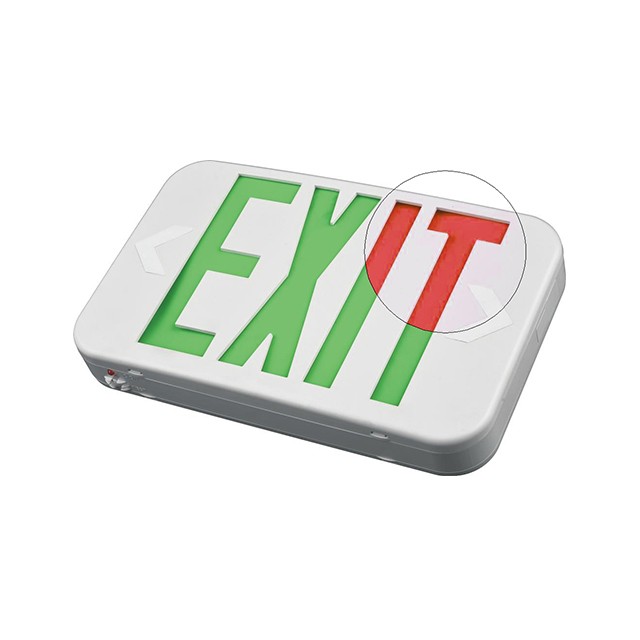
An emergency exit sign is not a separate category of signage. It is a sign that belongs to a broader emergency lighting system. This system keeps the sign functional when your main power supply fails. Think of it as your building's safety net for egress visibility during a crisis.
The core difference lies in how these signs respond to power loss. A standard exit sign stays on continuously. An emergency exit sign must detect when normal power drops and switch instantly to backup. This transfer happens automatically without any manual action as required by NFPA 101 and UL 924.
The heart of this system is the battery pack. You will find three common chemistries in modern units:
Sealed lead-acid (SLA): 3–5 years of service life
Nickel-cadmium (NiCd): 5–7 years of service life
Lithium-ion: 7–10 years of service life
NFPA 101 requires a minimum 90 minutes of emergency illumination after normal power fails for exit signs. This is the baseline performance standard for battery backup systems.
Your unit contains an onboard charger, battery pack, and switching electronics. During normal operation, the charger keeps the battery topped up. When AC power fails, the switching electronics detect the loss and route battery power to the LED lamps. This all happens in seconds.
Modern units also offer self-testing capabilities. These features automate compliance checks that NFPA 101 mandates:
NFPA 101 Requirement | How Automatic Self-Testing Complies | Remaining Manual Duty |
|---|---|---|
Monthly 30-second test | Unit automatically executes the 30-second functional test without human intervention | Visual inspection for lamp aim and physical condition |
Annual 90-minute test | Unit automatically executes the full 90-minute duration test | Visual inspection for lamp aim and physical condition |
Record retention | Unit logs results internally and transmits data to BMS/cloud | Records must be retained and accessible for AHJ review for a minimum of 3 years |
Every emergency exit sign you install must meet UL 924 standards. This listing ensures the sign passes rigorous testing:
The sign must remain illuminated for at least 90 minutes during a power outage using battery or emergency power.
The sign must automatically switch to backup power without requiring manual intervention when normal power fails.
The sign must provide consistent, reliable brightness that remains clearly visible during emergency operation.
The sign must pass electrical and fire safety testing covering wiring, components, and overall construction.
You will find several mounting configurations available. Wall-mounted single-face signs work well above doorways. Double-face signs suit perpendicular mounting above corridors. Ceiling-mounted options are available for installation above corridors.
Legend styles also vary. Directional arrows are commonly used to indicate direction. Pictograms can provide universal, language-free guidance. Some projects require custom legends with multi-lingual panels.
Environmental conditions may influence the choice of housing material and design. Consult with the manufacturer and your local AHJ to ensure appropriate selection.
Your local Authority Having Jurisdiction (AHJ) holds final approval authority. They verify that your chosen signs meet all applicable codes for your specific building type and location.
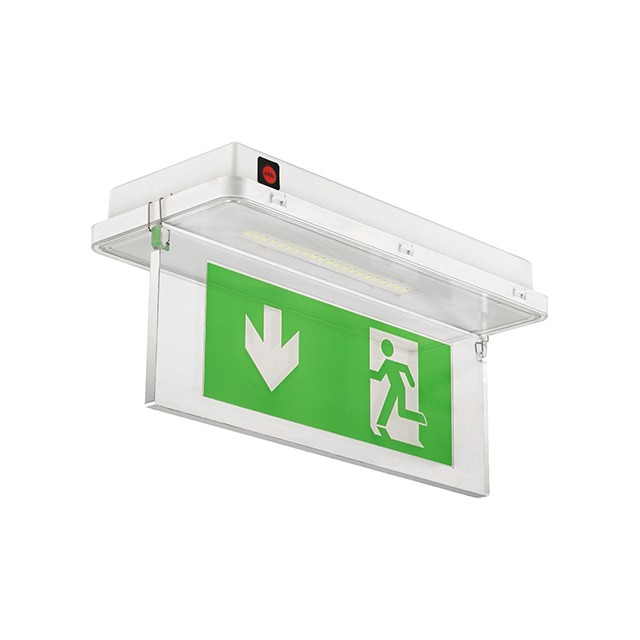
The most significant difference between these two signs comes down to when they activate. A standard exit sign stays on continuously. It draws power from your building's main electrical supply at all times. You never need to think about it. It simply works.
An emergency exit sign operates differently. It remains connected to the main power supply too. However, it constantly monitors that power source. When the main supply fails, the sign detects the loss instantly. Internal switching electronics route battery power to the LED lamps. This transfer happens automatically within seconds. No human action triggers the switch.
Your building likely needs both types. They serve different roles in your means of egress. The standard exit sign marks your primary route during normal conditions. The emergency exit sign takes over when darkness threatens. Together, they create a complete safety system.
The illumination requirements differ dramatically between normal and emergency conditions. During everyday operation, exit signs simply need a reliable light source. No specific brightness level applies. The sign just needs to remain visible and legible.
Emergency conditions demand much more. When power fails, your exit sign must remain illuminated for at least 90 minutes. The table below shows these requirements:
Element | Requirement | Applicable Condition |
|---|---|---|
Standard exit sign illumination | Reliable light source, no specific foot-candle value | Normal operation (always on) |
Emergency exit sign illumination | Must remain illuminated for at least 90 minutes after power failure | Emergency (power failure) |
You might wonder about photoluminescent signs. These glow-in-the-dark units require charging light. During normal occupancy, the charging source must provide about 5 foot-candles (54 lux) on the sign face. This charge sustains the sign during an outage.
Building codes treat these two signs differently. NFPA 101 and the International Building Code (IBC) mandate specific requirements for each type. You must understand these distinctions to pass inspections.
Testing protocols differ significantly. Standard exit signs require periodic bulb checks. You verify the lamp works and the sign remains visible. This simple visual inspection usually takes seconds.
Emergency exit signs demand more rigorous testing. NFPA 101 mandates monthly functional tests. Each test lasts at least 30 seconds. You press the test button to verify the light and battery backup work correctly. The unit must transfer to emergency mode and operate properly.
Annual testing goes further. You must perform a full 90-minute duration test. This test requires disconnecting building power entirely. The unit runs solely on battery for the full 90 minutes. This verifies the battery can sustain illumination during a real evacuation.
Test Type | Duration | Requirement |
|---|---|---|
Monthly | 30 seconds | Functional check to verify transfer to emergency mode |
Annual | 90 minutes | Full-duration test to confirm battery endurance under load |
Documentation | - | Records maintained for inspection by the Authority Having Jurisdiction |
You must document every test. Records of both monthly and annual tests need retention for inspection. The Authority Having Jurisdiction (AHJ) can request these records at any time. Failure to maintain proper documentation creates compliance issues.
Self-testing models simplify this process. These units automate monthly and annual checks automatically. They log results internally and transmit data to building management systems. This automation reduces maintenance costs while ensuring 100% code adherence. You eliminate the risk of forgetting a required test.
The distinction between these signs ultimately affects occupant safety. A standard exit sign guides people during normal conditions. An emergency exit sign provides critical illumination when power fails. Both systems work together to create a complete egress strategy. Understanding their differences helps you maintain full compliance and protect building occupants.
Start your assessment by calculating occupant load according to the International Building Code (IBC). The occupant load determines the number of exits required, and thus the number of exit signs.
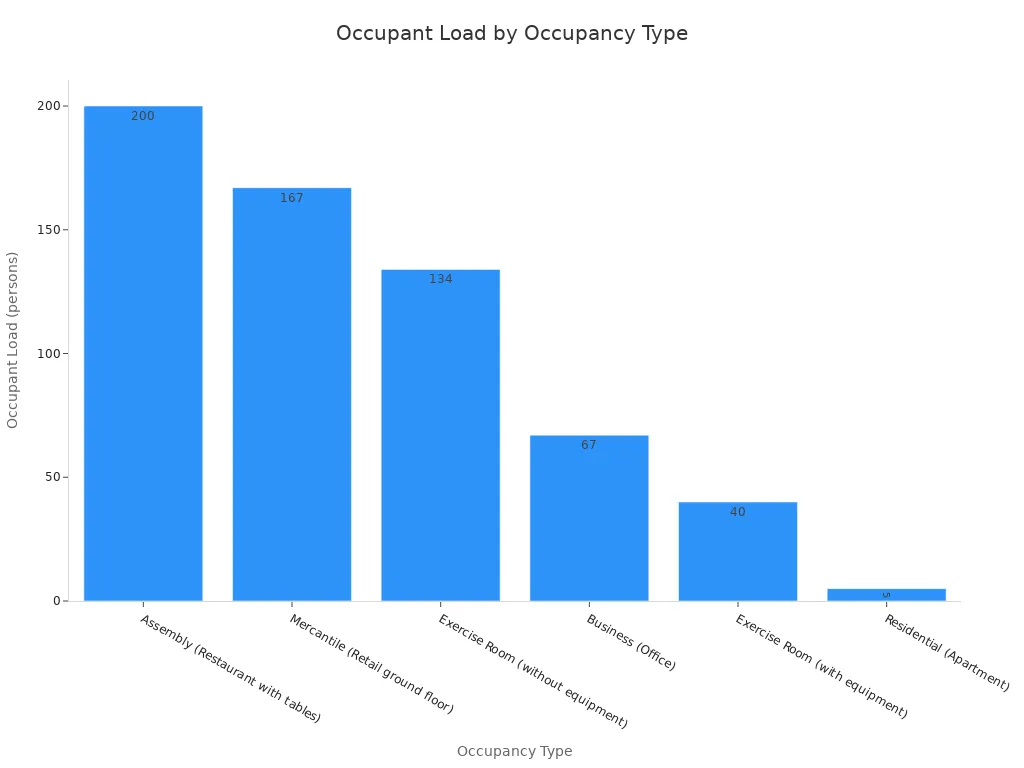
Your building layout shapes sign selection too. Long corridors need signs readable from greater distances. Standard signs work for sight lines up to 50 feet. Spaces like warehouses and atria require signs rated for 100-foot visibility. These units feature larger letters or brighter illumination.
Environmental conditions and architectural requirements should be considered when selecting housing materials and design. Consult with your local AHJ for appropriate choices.
NFPA 101 sets clear testing schedules for battery-backed signs. You must perform a monthly functional test. Press the test switch and confirm the sign operates on battery power for 30 seconds. Check for flickering or dim illumination during this window.
Test Frequency | Duration | Description |
|---|---|---|
Monthly | 30 seconds | Push-to-test: verify exit sign operates on battery backup |
Annually | 90 minutes | Full duration test: ensure batteries power the sign for the required evacuation period |
Annual testing demands more effort. Disconnect main power completely. The sign must remain illuminated for the full 90 minutes on battery alone. Ensure the sign remains illuminated for the full 90 minutes on battery alone. Inspect batteries and internal components for signs of wear.
Document every test result. The Authority Having Jurisdiction can request records during inspections. Written logs must show each monthly and annual test with its outcome. Missing documentation creates compliance problems even when your equipment functions properly.
Self-testing models simplify this burden. These units run automatic monthly and annual checks without manual intervention. They log results internally and transmit data to your building management system. This automation eliminates forgotten tests and reduces maintenance labor. Your emergency exit sign remains ready for a real power failure when you follow these protocols consistently.
A standard exit sign guides you along the expected path every day. An emergency exit sign becomes your lifeline when power fails unexpectedly. Both systems work together as part of a layered safety strategy. Building codes mandate both types for good reason.
Understanding this difference protects real people during real crises. You cannot rely on one sign alone. Each serves a distinct purpose in your means of egress.
Audit your facility today. Check which signs you have installed. Verify battery backups function properly. Test your emergency exit sign monthly and annually. Consult a fire safety professional to confirm full compliance. Your occupants deserve a clear path to safety in any situation.
A standard exit sign is always illuminated. An emergency exit sign activates when the main power fails. It provides backup guidance to help you find a safe route during a blackout.
NFPA 101 requires a minimum of 90 minutes of emergency illumination. This duration allows enough time for a full building evacuation during a crisis.
Yes. You must perform a monthly 30-second functional test and an annual 90-minute duration test. Self-testing models automate these checks to ensure compliance.
No. An exit sign marks the route. Emergency lighting fixtures illuminate the path of travel. The code requires specific illumination levels on the floor during an emergency.
Yes, they are a critical part of the means of egress. Building codes like NFPA 101 and the IBC mandate their use in most commercial and public buildings.

Phone: 0086-13566557272
Whatsapp: +86-13566557272
ADD: No.546 Qiye Road, Zhouxiang Town, Cixi, Zhejiang, China
ADD: Within Dinh Vu - Cat Hai Economic Zone, Dong Hai 2 Ward, Hai An District, Hai Phong City, Viet Nam
Customer Message


 Dual Head Emergency Light
 LED Emergency Light Remote Head
 Twin Spot Emergency Light
 Rechargeable LED Emergency Light
 Emergency Downlight
 Fire Exit Sign
 Running Man Exit Sign
 SALIDA Exit Signs
 SAÍDA Exit Signs
 Recessed Exit Sign
 UL Listed Exit Light
 Customized EXIT SIGN
 Power & Lighting Exit Sign
 Mounting & Housing Exit Sign
 Self Test Exit Sign
  Directional exit sign
 Custom Legends exit sign
 Custom Acrylic Signs
 LED Emergency Inverter
 Emergency Ballast
 Emergency Battery