

When you select life safety equipment, you must evaluate four critical factors: lumen output, IP rating, battery backup duration, and throw distance. Standard emergency fittings often fail to illuminate high-bay and wide-open spaces efficiently. Installing a dedicated twin spot emergency light solves this problem. Advanced FEITUO twin spot emergency light models deliver up to 2000 lumens through dual adjustable heads. You can direct these powerful light beams toward specific egress paths and structural obstacles. Facility managers, electricians, and safety officers rely on these units for code-compliant emergency illumination during power outages.
Select higher lumen outputs up to 2000 lumens for tall high-bay ceilings.
Rotate dual adjustable light heads to illuminate dark paths and exit doors.
Choose IP65 or higher weatherproof ratings for outdoor loading docks and rain.
Pick LiFePO4 batteries to ensure longer lifespan and low long-term maintenance costs.
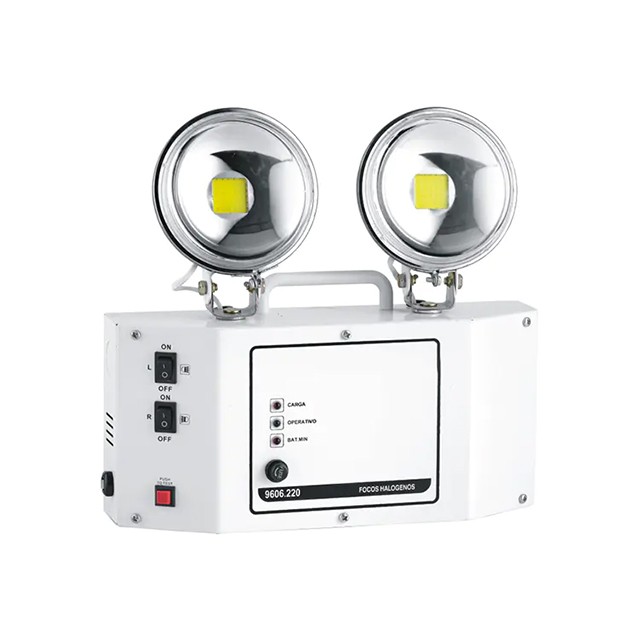
Ceiling height directly dictates your lighting needs. High ceilings require stronger light output to cast bright beams all the way down to floor level. FEITUO twin spot emergency light units feature high-efficiency SMD LEDs that deliver up to 2000 lumens. These powerful LEDs push bright, clear illumination across large vertical distances without losing intensity.
Ceiling Height | Recommended Output | Primary Application |
|---|---|---|
Standard (8 - 12 ft) | 300 - 600 Lumens | Commercial Offices |
Medium (12 - 20 ft) | 600 - 1200 Lumens | Retail Stores & Warehouses |
High-Bay (20+ ft) | 1200 - 2000 Lumens | Logistics Hubs & Factories |
Proper beam angle placement ensures full coverage across your facility floor. You must meet strict safety codes along every escape route. According to 29 CFR 1910.37(b), OSHA mandates that emergency egress paths and exit routes must maintain continuous lighting with an intensity of no less than 1 foot-candle (10.8 lux) measured at the ground level. Wider throw distances allow you to mount fewer fixtures while maintaining mandatory light levels.
Large open buildings often contain layout obstacles like high shelves, structural columns, or narrow hallways.
Pro Tip: Use dual adjustable heads to eliminate dark shadows near machinery and emergency exit doors.
You can rotate each head independently. Aim one lamp head down a long corridor while angling the second head around a structural column. This custom positioning directs light exactly where people walk during an emergency evacuation.
You must select proper Ingress Protection (IP) ratings to shield fixtures from harsh elements. Industrial plants, loading docks, and exterior walls face rain, extreme dust, and temperature shifts. Standard indoor units fail quickly under these severe conditions.
The table below outlines the necessary protection levels for exterior operational zones:
Ingress Protection (IP) Rating | Level of Protection | Recommended Outdoor Application |
|---|---|---|
IP65 | Dust-tight; protects against standard water jets | Baseline standard for general exterior lighting (e.g., streets, building façades, parking structures) |
IP66 | Dust-tight; protects against high-pressure water jets | Advanced protection for harsh conditions (e.g., highways, industrial zones, coastal areas) |
IP67 | Dust-tight; withstands short periods of water submersion | Specialized uses (e.g., ground-recessed fixtures, landscape lighting, flood-susceptible areas) |
Heavy machinery and flying debris threaten emergency fixtures in busy factories. You need rugged structural materials to prevent physical damage. Manufacturers build industrial units with ABS flame-retardant housing and clear polycarbonate diffusers. This combination resists severe impacts, harsh chemical vapors, and direct heat. Installing a durable twin spot emergency light ensures uninterrupted performance during catastrophic events.
️ Safety Note: Polycarbonate diffusers shield delicate internal LEDs while maintaining maximum visual clarity during sudden power loss.
Indoor commercial locations require a clean aesthetic. You must balance strict safety codes with professional interior visual appeal in offices, hotels, and retail stores.
Modern emergency lighting achieves this balance through sleek design strategies:
In-Ceiling Installation: Recessed fixtures sit within ceiling structures. This mounting style reduces visual clutter in high-design areas.
System Integration and Smart Controls: Recessed units connect directly with primary lighting circuits. Fixtures deliver ambient non-emergency lighting and instantly switch modes during safety events.
LED Technology: Compact LED backup systems provide high illumination levels without bulky traditional enclosures.
Internal battery chemistry determines how long emergency fixtures store power. Modern fixtures use advanced lithium iron phosphate (LiFePO4), nickel-cadmium (Ni-Cad), or sealed lead-acid systems. LiFePO4 batteries offer maximum life cycle efficiency and maintain a low self-discharge rate.
The table below outlines performance differences across common emergency lighting chemistries:
Battery Chemistry | Service Lifespan | Expected Cycle Life | Performance & Degradation |
|---|---|---|---|
LiFePO4 | 5 to 8 years | > 2,000 cycles | High efficiency with minimal capacity loss over time |
Lead-Acid | 1 to 2 years | 300 to 500 cycles | Significantly lower lifespan requiring frequent replacement |
Ni-Cad | 3 to 4 years | Lower efficiency | Less optimal long-term replacement cycle compared to LiFePO4 |
You must select the correct operational mode for your facility. Fixtures generally operate in one of two distinct modes:
Maintained Mode: Functions continuously during normal power conditions like a standard light fixture. It switches directly to internal battery reserves during power loss.
Non-Maintained Mode: Remains powered off during standard daily operations. It automatically activates via battery power only when an emergency power failure occurs.
Most non-maintained units deliver a mandatory 3-hour emergency backup duration during critical power outages.
Safety regulations mandate regular system testing. Modern fixtures perform automated self-testing routines to ensure continuous emergency readiness. These testing systems check battery health, LED drivers, and charging circuits without manual intervention.
Your building safety equipment must comply with key international standards:
IEC 60598-2-22: Specifies global requirements for emergency luminaires incorporating self-test functionality.
UL 924: Regulates safety and performance for emergency lighting and power equipment.
CE and RoHS: Certify electrical safety, health protection, and hazardous material restrictions.
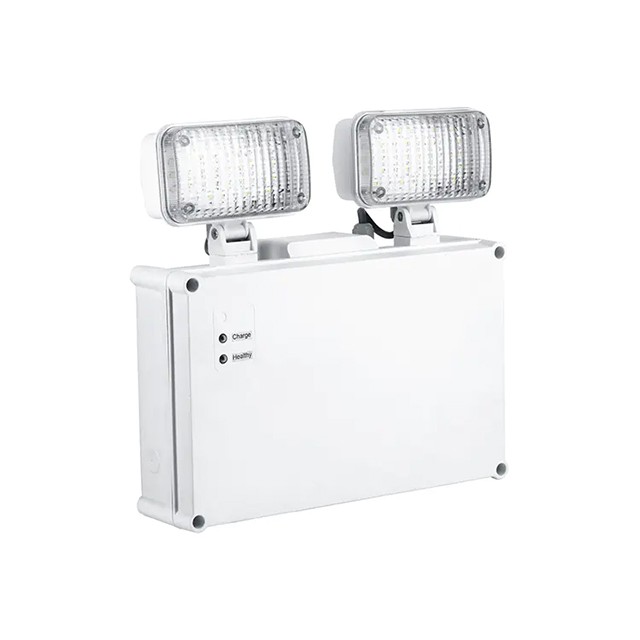
Every commercial and industrial facility presents unique layout challenges. You must match your safety equipment to the specific physical environment. Choosing the correct fixture design ensures optimal safety and regulatory compliance across every square foot.
High-bay logistics centers feature soaring ceilings and tall storage racks. These narrow aisles create deep shadows during sudden electrical failures. Standard wall-mounted lights cannot push sufficient brightness between packed shelves.
You need high-output illumination for these extreme spatial dimensions. FEITUO builds units that produce up to 2000 lumens using efficient SMD LEDs. Powerful light beams penetrate deep into long corridors. You can point one adjustable head down the main aisle. Then you can angle the second head toward emergency eye-wash stations or fire extinguishers.
Facility Feature | Lighting Requirement | Solution Benefit |
|---|---|---|
Ceiling Height (>20 ft) | High lumen concentration (1200 - 2000 lm) | Floor-level visibility without dark spots |
Narrow Aisles | Concentrated beam angles | Clear vision along long walking paths |
Machinery Traffic | Durable ABS and polycarbonate housing | Strong protection against accidental impacts |
Commercial office buildings and retail stores prioritize clean aesthetics alongside occupant safety. Low ceilings require wider beam dispersion rather than maximum downward throw distance.
[Main Entrance] <--- Wide Beam Coverage ---> [Emergency Exit Door] | (Dual Heads Directed Outward)
You can set dual adjustable lamp heads to cover wide floor areas in open office plans. Angle the lamp heads away from each other to create broad, overlapping illumination arcs. This arrangement guides employees and customers safely toward marked exit doors. Modern non-maintained systems keep the units dormant during regular business hours. The internal LiFePO4 batteries stay fully charged while consuming minimal standby electricity.
Installing a twin spot emergency light in high-bay zones requires careful planning. Proper physical placement guarantees continuous illumination across critical escape routes.
️ Installation Checklist:
Mounting Height: Position the fixture at least 10 to 15 feet above the floor for maximum coverage.
Aiming Angle: Tilt each lamp head 30 to 45 degrees downward toward the primary egress path.
Obstacle Clearance: Ensure structural steel beams do not block the light cone.
Circuit Connection: Connect the battery charging system to an unswitched AC power supply.
Follow these direct steps to complete the installation:
Turn off the main circuit breaker before starting electrical work.
Secure the heavy-duty mounting bracket directly to a concrete wall or steel support beam.
Pass your unswitched power lines through the rear cable entry point.
Wire the internal terminal block according to local electrical codes.
Snap the durable ABS enclosure securely onto the mounting bracket.
Target each head independently toward distinct floor hazards or exit doors.
Restore circuit power and verify the charging indicator LED turns green.
Emergency evacuations do not end at the exterior exit door. Occupants must safely navigate loading docks, exterior stairwells, and outdoor assembly zones. Rain, snow, wind, and ambient dust constantly threaten outdoor electrical fixtures.
You must install IP65-rated or IP67-rated weather-resistant fixtures outside exit doors. Sealed housing prevents water jets and airborne dust from entering the internal circuitry. Clear polycarbonate diffusers protect the LED light sources from driving rain and extreme temperature changes. Reliable 3-hour battery backups keep outdoor transition zones bright while employees move away from the building. You secure your facility by choosing the correct twin spot emergency light for each space.
Selecting the right safety equipment requires careful planning. You can follow this simple selection checklist for your next building project:
Illumination: Match lumen output to ceiling height.
Protection: Select IP65 or higher ratings for harsh environments.
Compliance: Verify OSHA and IEC standards. NFPA 101 mandates monthly 30-second functional tests and annual 90-minute battery endurance tests.
Balancing lumens, IP ratings, battery reliability, and local safety codes ensures complete occupant safety. Explore FEITUO's cost-effective twin spot emergency light models and flexible OEM/ODM customization services today to protect your facility.
Non-maintained units stay off during daily operations and turn on only during power outages. Maintained units stay on continuously during standard power conditions and switch to battery power during blackouts. Most FEITUO twin spot emergency lights operate in non-maintained mode to optimize energy savings.
Placement Tip: You should mount twin spot emergency lights between 10 and 15 feet high on structural walls or steel columns.
This installation height lets you aim the dual adjustable heads downward. You achieve maximum floor coverage and eliminate dark shadows along egress paths.
You need an IP65 or IP67 rating for outdoor emergency lighting. IP65-rated units protect internal components against strong water jets, rain, and heavy dust. This ingress protection guarantees reliable operation near loading docks, outdoor stairwells, and exterior exit doors.
LiFePO4 batteries offer superior efficiency over traditional chemistries. They provide clear operational benefits for your facility:
Lifespan of 5 to 8 years
Over 2,000 full charge cycles
Extremely low self-discharge rate
These advanced batteries significantly reduce your routine maintenance costs.

Phone: 0086-13566557272
Whatsapp: +86-13566557272
ADD: No.546 Qiye Road, Zhouxiang Town, Cixi, Zhejiang, China
ADD: Within Dinh Vu - Cat Hai Economic Zone, Dong Hai 2 Ward, Hai An District, Hai Phong City, Viet Nam
Customer Message


 Dual Head Emergency Light
 LED Emergency Light Remote Head
 Twin Spot Emergency Light
 Rechargeable LED Emergency Light
 Emergency Downlight
 Fire Exit Sign
 Running Man Exit Sign
 SALIDA Exit Signs
 SAÍDA Exit Signs
 Recessed Exit Sign
 UL Listed Exit Light
 Customized EXIT SIGN
 Power & Lighting Exit Sign
 Mounting & Housing Exit Sign
 Self Test Exit Sign
  Directional exit sign
 Custom Legends exit sign
 Custom Acrylic Signs
 LED Emergency Inverter
 Emergency Ballast
 Emergency Battery


