

You might wonder how long an LED exit sign truly lasts. Most units serve you well for 10 to 25 years. That wide range depends on two main parts inside the sign.
The LED lamp itself shines for decades. It rarely fails. The backup battery, however, needs attention every few years. This battery powers the sign during emergencies or tests. Its lifespan depends on how often you discharge and recharge it.
Environmental factors also matter. Extreme heat, humidity, or power surges can shorten the sign's life. You should understand these influences to plan maintenance properly.
This post explains what affects longevity, when to replace components, and how LED technology outperforms older lighting options. You will learn practical steps to keep your signs reliable and code-compliant.
LED exit signs last 10 to 25 years with proper maintenance.
Replace the backup battery every 3 to 5 years.
Heat, humidity, and power surges shorten the sign's life.
Test the battery monthly and annually per code requirements.
LED signs save money over time despite higher initial cost.
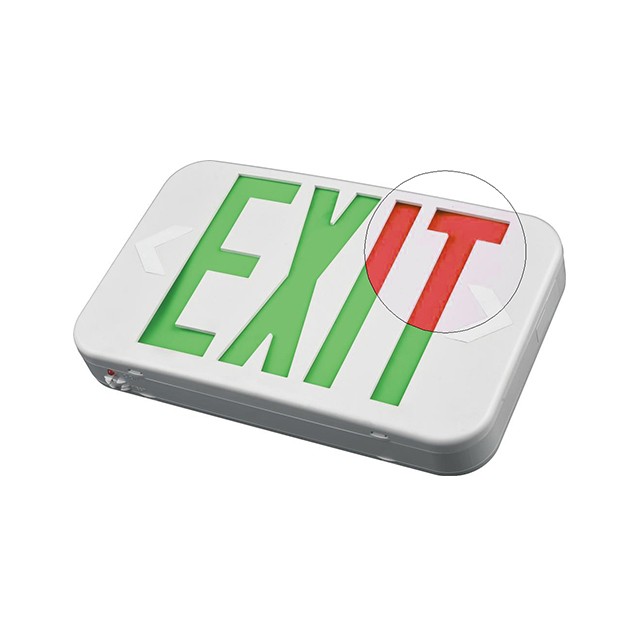
You need to understand the two distinct components inside your LED exit sign. Each part has its own lifespan. The LED lamp itself is the most durable element. FEITUO rates their LEDs for up to 100,000 hours of operation. That figure means the lamp can shine continuously for over 11 years without stopping. In real-world use, the lamp only activates during emergencies or monthly tests. This intermittent operation stretches its effective life far beyond that 11-year mark. Many FEITUO signs keep their original lamps bright for 25 years or more.
The backup battery tells a different story. This component stores power for emergency situations. When the main power fails, the battery takes over and lights the sign. FEITUO offers two main battery chemistries across their product line. The first type is nickel-cadmium (Ni-Cd). You will find this battery in models like the 6" High-Letter LED Exit Sign. It provides at least 90 minutes of emergency power and recharges fully within 24 hours. The second type is nickel-metal hydride (Ni-MH). FEITUO uses this chemistry in their Quick-Mount Aluminum model and their Quick-Install sign. The Ni-MH battery is maintenance-free and requires no periodic topping off.
Both battery types share a similar lifespan. According to manufacturer specifications, quality Ni-Cd and Ni-MH batteries last an average of 3 to 5 years under normal operating conditions. This applies equally to both chemistries. The battery degrades each time you discharge and recharge it during testing. After several years, it loses its ability to hold a full charge. You will notice the sign dims sooner during emergency tests. At that point, you need to replace the battery.
You can expect your complete LED exit sign unit to serve you for 10 to 25 years. This range accounts for the different lifespans of its components. The LED lamp rarely fails within this period. The housing and electronics also hold up well. FEITUO constructs their signs with fire-resistant ABS plastic or die-cast aluminum. These materials resist impact and corrosion. The IP20-rated casings protect internal parts from dust and accidental contact. For wet locations, FEITUO offers IP65-rated waterproof models that shield components from moisture.
The battery remains the primary maintenance item. You will likely replace it two to four times during the sign's overall life. This replacement is simple and inexpensive. You do not need to purchase a whole new sign. Just swap out the old battery for a fresh one. The sign continues operating for many more years.
Environmental factors can shorten or extend this timeline. A sign in a climate-controlled hallway will last longer than one exposed to extreme temperatures. Power surges can damage the electronics. Humidity can corrode internal connections. You should consider these factors when planning your maintenance schedule.
The 10 to 25 year rule gives you a practical planning window. You can budget for battery replacements every few years. You can also anticipate when the entire unit might need replacement. Most building codes require monthly testing and annual full-duration tests. These checks help you catch problems early. A battery that fails to provide the required 90 minutes of emergency power needs immediate replacement. The whole unit should be replaced if the LED lamps dim noticeably, the housing cracks, or the sign no longer meets current code requirements.
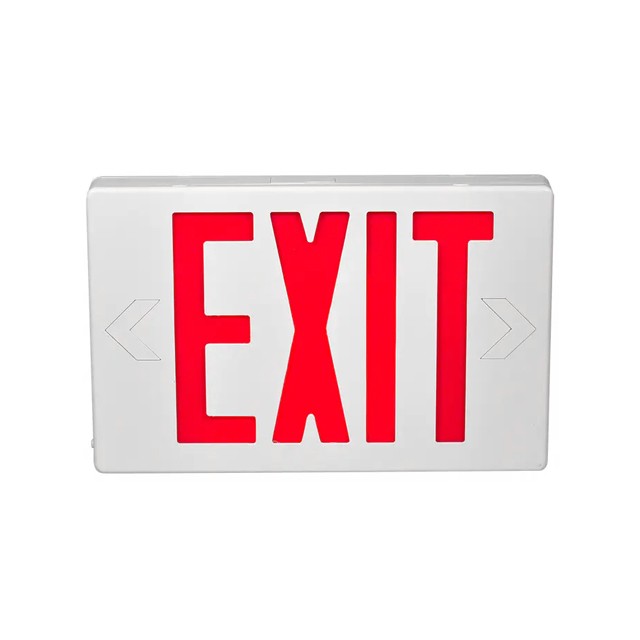
The environment around your exit sign plays a major role in how long it lasts. Heat is the biggest enemy of LED components. For every 10°C increase in temperature, the lifespan of semiconductor parts drops by half. This means a sign in a hot attic or near a furnace will fail much sooner than one in a cool hallway. The driver electronics also suffer from heat. Poor driver design causes electrical instability and early failure. Quality drivers handle heat better and last longer.
Humidity and moisture create another set of problems. High humidity leads to corrosion on wiring and connections. Over time, this corrosion can break the electrical path and cause the sign to fail during an emergency. Salt air near coastal areas accelerates this corrosion even faster. The moisture penetrates seals and causes short circuits. UV radiation from direct sunlight degrades plastic housings and the LED lenses themselves. The plastics become brittle and crack. The LEDs may dim or change color. This is a serious concern for signs mounted outdoors or near windows.
Vibration presents another risk. An LED exit sign resists vibration better than old incandescent bulbs. It has no filament to break. However, vibration can still loosen connections inside the sign. When connections become loose, the sign may flicker or stop working entirely. This is especially important in industrial settings near heavy machinery or in buildings near train tracks or highways. Frequent storms with high winds can also introduce vibration stress.
FEITUO designs their signs to handle these challenges. Their standard models use IP20-rated casings. This rating protects against dust and accidental contact. For wet or outdoor locations, FEITUO offers IP65-rated models. These completely seal the electronics from moisture and dust. The IP65 rating also provides protection against water jets, making these signs suitable for outdoor use in rain or snow. Choosing the right model for your environment extends the sign's life significantly.
How you use your LED exit sign also affects its longevity. The LED lamp itself can run continuously for many years. It does not wear out from normal use. The backup battery, however, has a different story. Every time you test the sign, the battery discharges and then recharges. Each cycle reduces its capacity slightly. Over many cycles, the battery loses its ability to hold a full charge. This is why monthly testing and annual full-duration tests are important. They help you catch a failing battery before it fails during a real emergency.
Power quality is another critical factor. Power surges can destroy the delicate electronics inside your sign. A surge is a sudden spike in voltage. Lightning strikes, power grid switching, or large equipment starting up can all cause surges. These spikes can instantly damage the circuit board, making the sign non-operational. Voltage sags, or brief drops in voltage, can also cause problems. The sign may malfunction or reset improperly. Electrical noise, also called EMI, can disrupt the control circuits. This noise causes the electronics to run hotter, shortening their life. Overvoltage, where the voltage stays too high, can destroy all circuitry instantly. Brownouts cause voltage to fluctuate between high and low, which can also lead to malfunction or destruction of electronic circuits.
The quality of the internal driver matters too. Cheap drivers run hotter and degrade faster. They provide unstable power to the LEDs, causing them to flicker or dim prematurely. FEITUO uses quality components in their signs. You can further protect your investment by installing surge protectors on the circuit that powers your exit signs. This simple step prevents many power-related failures. A good surge protector absorbs the excess voltage and protects the sensitive electronics inside your sign.
The backup battery demands your regular attention. This component wears out faster than any other part. You must test it consistently to catch problems early. Building codes across the United States follow the NFPA 101 Life Safety Code. This standard sets clear testing requirements for every LED exit sign.
Testing Frequency | Test Duration | Purpose |
|---|---|---|
Monthly | 30 seconds | Functional check to verify the battery backup activates and runs |
Annually | 90 minutes | Full-duration test to confirm battery capacity for complete evacuation |
You perform the monthly test quickly. Press the test button and watch the sign run on battery power for 30 seconds. This check confirms the battery activates properly. The annual test takes longer. You disconnect the main power and let the sign run for a full 90 minutes. This verifies the battery holds enough charge for a complete building evacuation.
You should also follow a broader maintenance schedule. Weekly inspections catch flickering lights or dust buildup. Monthly cleaning keeps high-traffic areas clear. Quarterly checks focus on hard-to-reach fixtures. Annual reviews assess energy usage and lighting layout.
Replacement – Replace batteries when they fail to provide 90 minutes of operation (typically every 3-5 years).
You must replace the battery immediately when specific failures occur during testing:
Immediate replacement is required if the fixture fails the annual 90-minute discharge test.
Specific failure condition: Illumination drops below 0.1 footcandles at any point before the 90-minute mark.
Specific failure condition: The fixture fails to activate on battery backup within 10 seconds of AC power isolation.
Specific failure condition: The fixture completely extinguishes or drops below the minimum illumination level mid-test.
These conditions signal a battery that cannot support emergency operations. Replace it right away.
Sometimes the whole LED exit sign requires replacement, not just the battery. You should watch for several warning signs. Dim LED lamps indicate the light source is failing. This rarely happens before 10 years, but it can occur in harsh environments. Damaged housing also demands attention. Cracks or breaks in the casing expose internal components to moisture and dust. This compromises safety and accelerates wear.
Outdated signs present another concern. Building codes evolve over time. Your sign may no longer meet current requirements. Check your local fire and safety regulations periodically. If your sign fails to comply, replace the entire unit. A new LED exit sign costs little compared to the safety risk of an outdated model. Regular testing and prompt replacement keep your building safe and code-compliant.
You might wonder how LED technology stacks up against the older lighting options. The difference is dramatic. Incandescent bulbs burn out after roughly 1,000 hours of use. That means a traditional exit sign needs new bulbs every year or two. Fluorescent tubes perform better but still fall short. They typically last between 8,000 and 10,000 hours. You would replace those tubes every three to five years.
LED lamps change the equation entirely. A quality LED fixture operates for 50,000 hours or more. Some premium models, like those from FEITUO, push that figure to 100,000 hours. This longevity transforms your maintenance routine. You stop worrying about lamp replacements altogether. The lamp simply outlasts every other component in the sign.
Technology | Lifespan (hours) | Practical Replacement Interval |
|---|---|---|
Incandescent | ~1,000 | Every 1–2 years |
Fluorescent | 8,000–10,000 | Every 3–5 years |
LED | 50,000+ | 10–25 years or more |
The table above shows the clear winner. An LED exit sign eliminates the most frequent maintenance task. You replace the backup battery every few years, but the lamp itself stays bright for decades. This reliability matters most during emergencies. You never want a burned-out lamp when people need to evacuate.
The initial price of an LED exit sign exceeds that of older models. You might hesitate at the higher purchase cost. The long-term savings, however, more than compensate. Energy consumption tells the story. LED signs draw only 2 to 5 watts of power. Fluorescent signs consume 15 to 20 watts. Incandescent models use even more. This difference adds up quickly.
Consider the annual savings. One LED sign saves approximately 132 kilowatt-hours per year compared to a fluorescent model. At the average electricity rate of $0.12 per kilowatt-hour, that translates to about $16 per sign annually. If your building has eight exit signs, you save roughly $128 every year. These figures come directly from industry comparisons of LED and fluorescent technology.
Metric | Value |
|---|---|
Payback period (energy only) | 3–5 years |
LED power draw | 2–5 watts |
Fluorescent power draw | 15–20 watts |
Annual energy savings per sign | 132 kWh ($16/year at $0.12/kWh) |
Annual energy savings for 8 signs | ~$128/year |
The payback period for the higher initial cost typically spans three to five years. After that point, the savings become pure profit. You also avoid the labor costs of frequent lamp replacements. An LED exit sign pays for itself multiple times over its operational life. The math makes the decision straightforward. Choose LED technology and let the savings accumulate year after year.
Your LED exit sign serves you for 10 to 25 years. The backup battery needs replacement every 3 to 5 years. Older incandescent bulbs last only 1 to 2 years. You rarely need to replace the LED lamp itself. The battery and your building's environment drive most maintenance needs. Extreme temperatures or humidity can shorten the lifespan significantly. Always check your manufacturer's specifications for your specific model. Follow your local fire and safety codes for testing and replacement intervals. Testing monthly and annually catches problems early. A failing battery cannot support a full 90-minute evacuation. Replace it immediately when it fails a test. These steps keep your emergency signs functional and reliable.
You should test monthly and annually. The monthly test runs 30 seconds on battery power. The annual test runs the full 90 minutes. These checks verify your battery holds enough charge for a real emergency. Follow NFPA 101 Life Safety Code requirements.
You can replace just the battery in most cases. The LED lamp lasts decades. The housing and electronics also hold up well. Only replace the entire unit when the lamps dim, the casing cracks, or the sign no longer meets current code requirements.
Yes. The backup battery activates automatically when main power fails. The sign switches to battery power within seconds. FEITUO models provide at least 90 minutes of emergency illumination. This gives occupants enough time to evacuate safely during an emergency.
Yes. NFPA 101 Life Safety Code requires exit signs in commercial buildings. Your local fire and safety regulations may add stricter requirements. LED signs meet these codes while consuming far less energy than older models. Always verify your specific model complies with your local jurisdiction.


Phone: 0086-13566557272
Whatsapp: +86-13566557272
ADD: No.546 Qiye Road, Zhouxiang Town, Cixi, Zhejiang, China
ADD: Within Dinh Vu - Cat Hai Economic Zone, Dong Hai 2 Ward, Hai An District, Hai Phong City, Viet Nam
Customer Message


 Dual Head Emergency Light
 LED Emergency Light Remote Head
 Twin Spot Emergency Light
 Rechargeable LED Emergency Light
 Emergency Downlight
 Fire Exit Sign
 Running Man Exit Sign
 SALIDA Exit Signs
 SAÍDA Exit Signs
 Recessed Exit Sign
 UL Listed Exit Light
 Customized EXIT SIGN
 Power & Lighting Exit Sign
 Mounting & Housing Exit Sign
 Self Test Exit Sign
  Directional exit sign
 Custom Legends exit sign
 Custom Acrylic Signs
 LED Emergency Inverter
 Emergency Ballast
 Emergency Battery