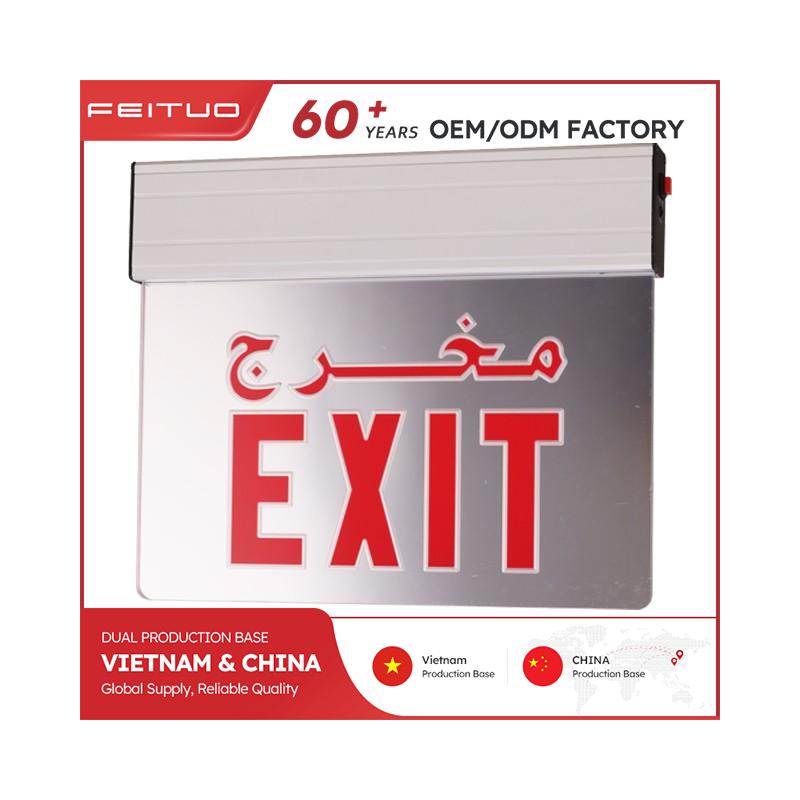
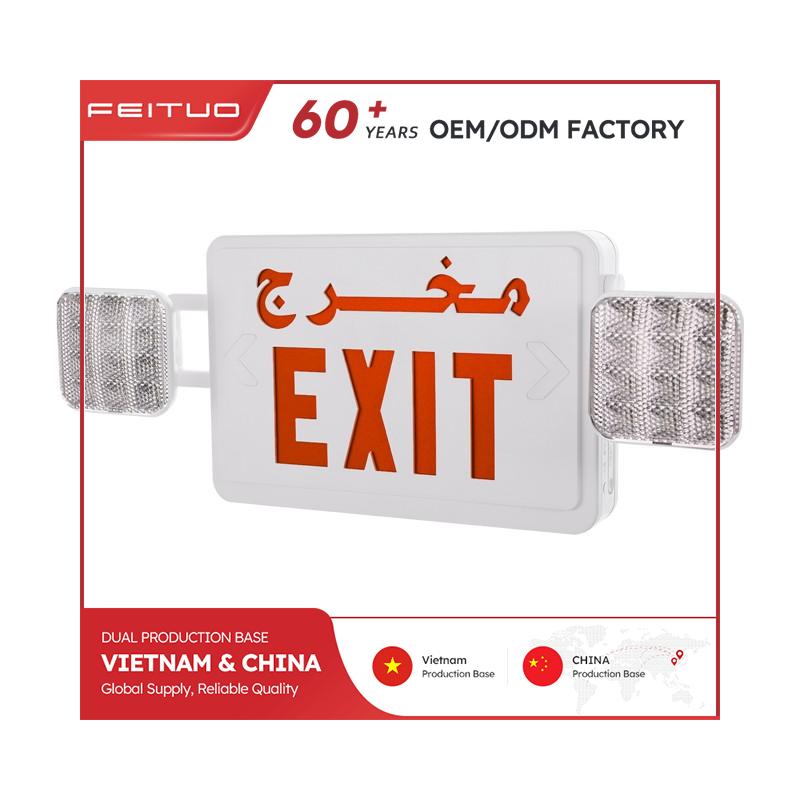
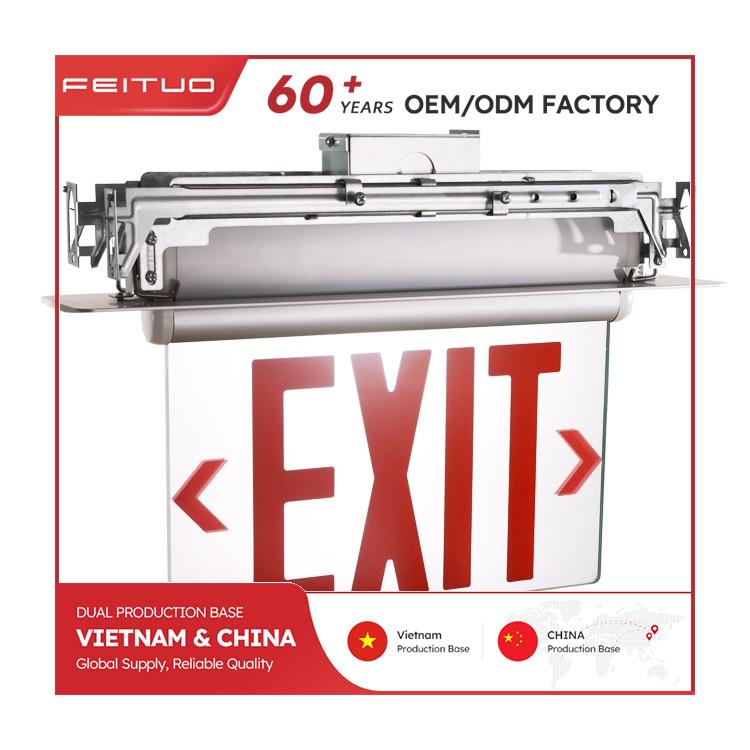
Exit signs are a critical component of building safety systems, guiding occupants to safety during emergencies. Their visibility can mean the difference between orderly evacuation and chaos in crises such as fires, earthquakes, or power outages. A fundamental question arises: Do exit signs have to be illuminated to fulfill their purpose effectively? This article explores the regulatory requirements, technical standards, and practical considerations surrounding illuminated exit signs, emphasizing their indispensable role in life safety.
Regulatory Framework: Legal Mandates for Illumination
Building codes and fire safety regulations universally mandate that exit signs be illuminated. In the United States, the International Building Code (IBC) and National Fire Protection Association (NFPA) Life Safety Code (NFPA 101) set clear standards. These codes require exit signs to be "legible" and "visible" under all conditions, including power failures. To achieve this, signs must either be internally illuminated (e.g., with LEDs or incandescent bulbs) or externally lit by an emergency lighting system that activates when normal power is disrupted.
Similarly, international standards such as the International Fire Code (IFC) and ISO 7010 reinforce these requirements. For instance, ISO 7010 specifies that exit signs must use standardized pictograms and remain visible from a distance of at least 20 meters in low-light conditions. These regulations are not arbitrary; they are rooted in decades of research into human behavior during emergencies, which shows that illuminated signage reduces evacuation times and prevents injuries.

Technical Specifications: How Illumination Ensures Visibility
The effectiveness of an exit sign depends on its brightness, contrast, and reliability. Modern exit signs typically use photoluminescent materials or electric lighting to meet visibility standards.
1.Photoluminescent Exit Signs: These signs absorb and store ambient light, emitting it in darkness. While cost-effective and energy-efficient, their performance depends on prior exposure to light. In prolonged blackouts or smoky environments, their visibility may degrade, making them supplementary rather than primary solutions.
2.Electrically Illuminated Exit Signs: These are the gold standard, offering consistent brightness regardless of external conditions. LED exit signs, for example, consume minimal energy, last for years, and remain visible even through smoke. Many models include battery backups that provide illumination for 90 minutes or more during power outages, aligning with NFPA requirements.
Regulations also dictate placement. Exit signs must be mounted above doors, along escape routes, and near stairwells, ensuring they are unobstructed and positioned at angles visible from intersecting corridors. Without illumination, even perfectly placed signs may go unnoticed in low-light scenarios, rendering them ineffective.
Practical Implications: Why Non-Illuminated Signs Fail
Imagine a crowded theater during a fire. Smoke fills the air, and the lights go out. A non-illuminated exit sign—no matter how boldly printed—will blend into the darkness, leaving occupants disoriented. Studies by the National Institute of Standards and Technology (NIST) reveal that evacuees rely heavily on visual cues in stressful situations. Illuminated exit signs act as beacons, cutting through confusion and guiding people toward safety.
Moreover, non-compliance with illumination standards carries legal and ethical risks. Building owners who neglect this requirement may face fines, lawsuits, or worse—loss of life. For example, the 2003 Station Nightclub fire in Rhode Island highlighted the consequences of inadequate exit signage. While not solely caused by unlit signs, the tragedy underscored the need for unambiguous, visible guidance during emergencies.
Conclusion: The Unassailable Case for Illuminated Exit Signs
In conclusion, the illumination of exit signs is not a matter of preference but a non-negotiable safety imperative. Regulatory bodies worldwide enforce strict standards to ensure these signs remain visible under all circumstances, from routine operations to catastrophic failures. Technological advancements have made illuminated exit signs more reliable, energy-efficient, and cost-effective than ever, eliminating excuses for non-compliance.
Exit signs serve a singular, life-saving purpose: to direct occupants to safety without hesitation. Illumination is the linchpin that makes this possible, transforming static symbols into dynamic guides capable of overcoming darkness, smoke, and panic. As buildings evolve and emergencies grow more complex, the role of exit signs—and their illumination—will only become more critical. Compliance with lighting requirements is not just a legal obligation; it is a moral duty to protect human lives. In the end, no argument against illuminated exit signs holds weight when weighed against the value of a single life saved.

Phone: 0086-13566557272
Whatsapp: +86-13566557272
ADD: No.546 Qiye Road, Zhouxiang Town, Cixi, Zhejiang, China
ADD: Within Dinh Vu - Cat Hai Economic Zone, Dong Hai 2 Ward, Hai An District, Hai Phong City, Viet Nam
Customer Message


 Dual Head Emergency Light
 LED Emergency Light Remote Head
 Twin Spot Emergency Light
 Rechargeable LED Emergency Light
 Emergency Downlight
 Fire Exit Sign
 Running Man Exit Sign
 SALIDA Exit Signs
 SAÍDA Exit Signs
 Recessed Exit Sign
 UL Listed Exit Light
 Customized EXIT SIGN
 Power & Lighting Exit Sign
 Mounting & Housing Exit Sign
 Self Test Exit Sign
  Directional exit sign
 Custom Legends exit sign
 Custom Acrylic Signs
 LED Emergency Inverter
 Emergency Ballast
 Emergency Battery