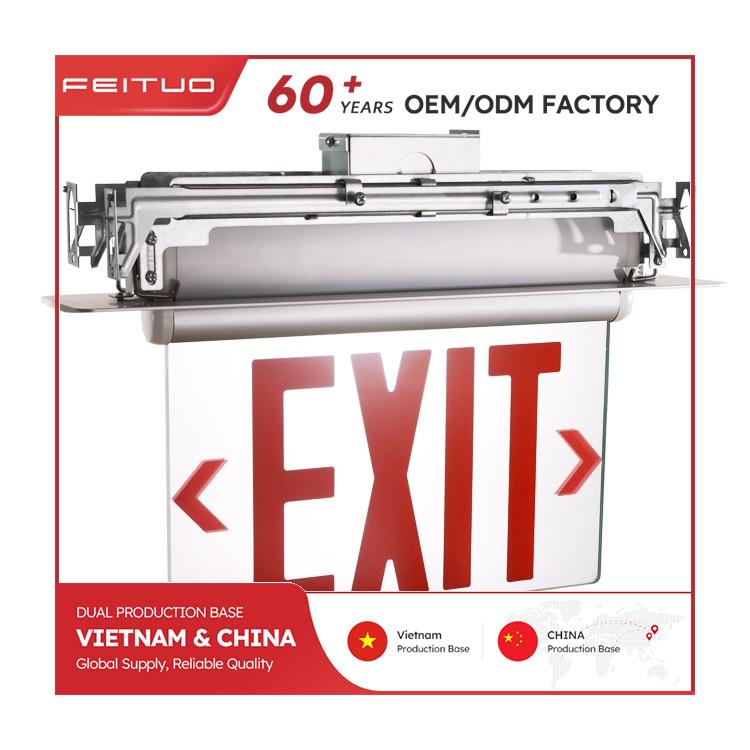
In modern building design, safety and aesthetics are often intertwined. Among the critical safety features, recessed exit signs stand out as a unique solution that balances regulatory compliance with architectural harmony. These specialized signs are embedded into walls or ceilings, creating a streamlined appearance while maintaining their primary function: guiding occupants to safety during emergencies. This article explores the definition, design, installation, and applications of recessed exit signs, shedding light on their growing popularity in contemporary structures.
Definition and Core Function
A recessed exit sign is a safety device installed flush with or slightly recessed into a wall, ceiling, or floor cavity. Unlike traditional surface-mounted signs, which protrude outward, recessed models conceal most of their housing behind the building’s surface, leaving only the illuminated legend (e.g., "EXIT" or directional arrows) visible. This design minimizes visual clutter, enhances architectural aesthetics, and reduces the risk of physical damage or tampering.
The primary purpose of a recessed exit sign remains unchanged: to provide clear, visible guidance during emergencies such as fires, power outages, or evacuations. By integrating seamlessly into the built environment, these signs ensure occupants can locate exits quickly without distractions, a critical factor in high-stress scenarios.
Design and Components
Recessed exit signs are engineered with precision to meet both safety standards and design expectations. Key components include:
1.Housing: The structural frame that fits into the wall or ceiling cavity. Made from durable materials like aluminum or steel, it protects internal components.
2.Illuminated Panel: Typically edge-lit with LEDs or fluorescent tubes, the panel displays the "EXIT" text or directional arrows. Edge-lit designs use transparent acrylic or polycarbonate panels with etched legends, diffusing light evenly for high visibility.
3.Trim and Faceplate: The visible outer layer, often slim and flush with the surface, available in finishes like brushed metal or matte paint to match interior decor.
4.Power Source: Options include AC (hardwired), AC/DC (battery backup), or self-powered models (e.g., photoluminescent or tritium-based). LED variants dominate due to their energy efficiency and long lifespan.
Edge-lit recessed exit signs are particularly popular for their sleek profile. For example, the Chicago Edge-Lit LED Exit Sign combines a slim aluminum frame with a curved, downward-facing panel, ensuring visibility even in narrow corridors.

Installation and Compliance
Installing a recessed exit sign requires adherence to strict guidelines to ensure functionality and code compliance. Key steps include:
1.Location Selection: Signs must be placed along escape routes, near exits, and at intersections. Regulations like the NFPA 101 Life Safety Code specify minimum viewing distances (e.g., 16 meters for standard LED models) and mounting heights (typically 2–2.5 meters above the floor).
2.Cavity Preparation: A precise cutout is made in the wall or ceiling using manufacturer-provided templates. The housing must fit snugly to prevent air leaks or misalignment.
3.Wiring and Power: Hardwired models require connection to the building’s electrical system, often with a battery backup for emergencies. Self-testing features are common to simplify maintenance.
4.Alignment and Sealing: The trim plate and faceplate are adjusted to ensure the legend is level and readable. Gaps around the housing are sealed to maintain fire resistance and energy efficiency.
For instance, the REELTECH LED Recessed Exit Route Sign offers dual operation modes (maintained/non-maintained) and can be customized with arrow directions during installation. Manufacturers emphasize that only qualified personnel should handle installation to avoid electrical hazards or code violations.
Applications and Benefits
Recessed exit signs are favored in environments where aesthetics and unobtrusive safety are priorities:
High-End Interiors: Hotels, theaters, and corporate lobbies use recessed signs to maintain a polished look without compromising safety.
Healthcare Facilities: Hospitals and clinics prioritize clean lines and minimal protrusions to reduce dust accumulation and facilitate cleaning.
Historic Buildings: Retrofitting older structures with recessed signs preserves architectural integrity while upgrading safety.
Narrow Corridors: In spaces like stairwells or subway tunnels, recessed models avoid projecting into walkways, ensuring unobstructed passage.
The benefits extend beyond aesthetics. Recessed signs are less prone to vandalism, accidental damage, or obstruction by furniture. Their flush design also reduces airflow disruption in HVAC-sensitive areas like cleanrooms or data centers.
Conclusion
The recessed exit sign represents a harmonious fusion of safety and design, addressing the need for visible emergency guidance without sacrificing architectural elegance. By embedding critical signage into walls and ceilings, these devices offer a low-profile yet highly effective solution for modern buildings. Whether in a luxury hotel, a healthcare facility, or a historic landmark, the recessed exit sign ensures compliance with fire codes while enhancing the visual appeal of interior spaces. As building standards evolve and design trends prioritize minimalism, the recessed exit sign will continue to play a pivotal role in creating safe, functional, and aesthetically pleasing environments. Its ability to blend seamlessly into the built environment while fulfilling a life-saving purpose underscores its value as an indispensable component of contemporary safety infrastructure.

Phone: 0086-13566557272
Whatsapp: +86-13566557272
ADD: No.546 Qiye Road, Zhouxiang Town, Cixi, Zhejiang, China
ADD: Within Dinh Vu - Cat Hai Economic Zone, Dong Hai 2 Ward, Hai An District, Hai Phong City, Viet Nam
Customer Message


 Dual Head Emergency Light
 LED Emergency Light Remote Head
 Twin Spot Emergency Light
 Rechargeable LED Emergency Light
 Emergency Downlight
 Fire Exit Sign
 Running Man Exit Sign
 SALIDA Exit Signs
 SAÍDA Exit Signs
 Recessed Exit Sign
 UL Listed Exit Light
 Customized EXIT SIGN
 Power & Lighting Exit Sign
 Mounting & Housing Exit Sign
 Self Test Exit Sign
  Directional exit sign
 Custom Legends exit sign
 Custom Acrylic Signs
 LED Emergency Inverter
 Emergency Ballast
 Emergency Battery