

Exit signs are critical safety features in buildings, guiding occupants to emergency exits during fires, power outages, or other emergencies. These illuminated markers are typically installed in high-visibility areas such as hallways, stairwells, and near doors. However, there are scenarios where removing an exit sign becomes necessary—whether due to renovations, redesigning evacuation routes, replacing outdated models, or decommissioning redundant signs. While the process may seem straightforward, improper removal can compromise safety, violate building codes, or damage electrical systems. This article provides a step-by-step guide to safely removing an exit sign, highlights key precautions, and underscores the importance of adhering to regulations to maintain a secure environment.
How to Remove an Exit Sign: A Step-by-Step Guide
1.Assess the Need for Removal
Before proceeding, confirm that the exit sign is no longer required. Building codes mandate that exit signs be visible and functional at all times. Removing a sign without proper justification or alternative placement could lead to safety violations. Consult local fire codes or a building inspector to ensure compliance. For example, if renovations alter evacuation routes, a new exit sign may need installation elsewhere before removing the old one.
2.Gather Tools and Safety Equipment
Removing an exit sign requires basic tools and protective gear:
Tools: Screwdriver (Phillips or flathead), voltage tester, wire cutters/strippers, ladder (if the sign is mounted high), and a non-contact voltage detector.
Safety Equipment: Gloves, safety goggles, and insulated footwear to protect against electrical shocks.
Additional Materials: Electrical tape, wire nuts, and a replacement sign (if applicable).
3.Turn Off Power to the Exit Sign
Exit signs are often wired directly into the building’s electrical system. To avoid electrocution:
Locate the circuit breaker panel and identify the switch controlling the exit sign’s power. Label it for future reference.
Use a voltage tester to confirm the power is off by touching the tester to the sign’s wiring. If the tester lights up or beeps, the circuit is still active.
If unsure, shut off the main power supply to the building as a precaution.
4.Remove the Exit Sign Cover or Housing
Most exit signs have a removable cover or housing that protects the internal components.
Use a screwdriver to loosen the screws securing the cover. Some models may have snap-on covers that require gentle prying with a flathead tool.
Place screws in a secure location to avoid losing them.
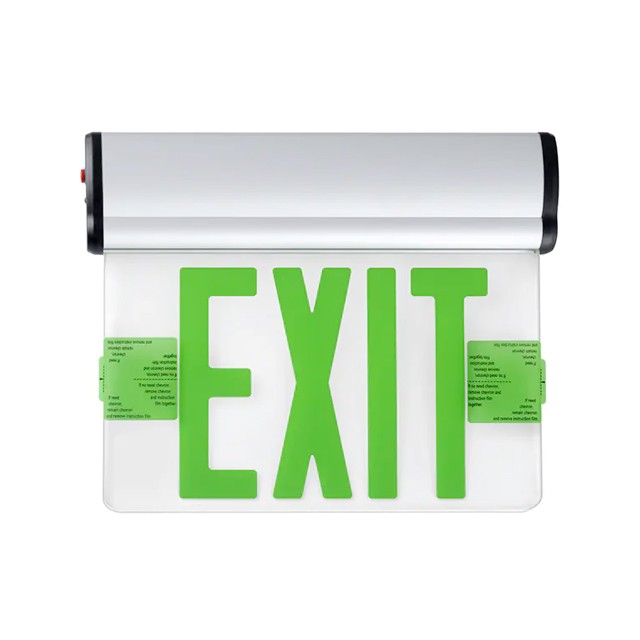
5.Disconnect the Wiring
Inside the housing, you’ll find electrical wires connected to the sign.
Identify the live (black or red), neutral (white), and ground (green or bare copper) wires.
Use wire cutters to carefully sever the wires, leaving enough length to reconnect a new sign if needed. Alternatively, unscrew wire nuts if the connections are made this way.
Wrap exposed wires with electrical tape or cap them with wire nuts to prevent accidental contact.
6.Remove the Mounting Bracket
The exit sign is typically attached to a mounting bracket on the wall or ceiling.
Unscrew the bracket from the surface using a screwdriver.
If the bracket is glued or nailed, gently pry it away with a putty knife or crowbar, taking care not to damage the surrounding area.
7.Patch and Repair the Surface
After removing the bracket, fill screw holes with spackling compound and sand the area smooth.
For painted surfaces, touch up with matching paint to maintain aesthetics.
If the exit sign was recessed into the ceiling, repair any gaps or damage to the ceiling tiles or drywall.
8.Dispose of the Exit Sign Properly
Exit signs may contain hazardous materials such as batteries (in LED or incandescent models) or trace amounts of mercury (in older fluorescent signs).
Check local regulations for electronic waste disposal. Many areas require recycling through certified facilities.
Do not discard the sign in regular trash bins.
Key Considerations When Removing an Exit Sign
1.Compliance with Building Codes
Exit signs are regulated by the International Building Code (IBC) and National Fire Protection Association (NFPA) standards. Removing a sign without replacing it or updating evacuation plans may violate these codes, leading to fines or legal liability. Always document the removal process and notify relevant authorities if required.
2.Electrical Safety
Never attempt to remove an exit sign without cutting power first. Even low-voltage signs can pose a risk if mishandled. Use a non-contact voltage detector to double-check that wires are de-energized. If the sign is part of a backup battery system, disconnect the battery before proceeding.
3.Alternative Signage
If the exit sign is being removed permanently, ensure alternative signage is in place to guide occupants. For example, if a hallway exit is closed, install a temporary “Exit Closed” sign or redirect traffic with floor markings.
4.Accessibility
Exit signs must remain visible from a distance of at least 100 feet and be mounted no higher than 80 inches from the floor. When replacing a sign, ensure the new one meets these criteria.
5.Professional Assistance
If the exit sign is hardwired into a complex electrical system or located in a high-risk area (e.g., near emergency lighting), hire a licensed electrician to handle the removal.
Conclusion
Removing an exit sign is a task that demands careful planning, adherence to safety protocols, and compliance with legal standards. While the process involves straightforward steps—turning off power, disconnecting wiring, and repairing surfaces—the implications of negligence can be severe. Exit signs are vital to life safety systems, and their removal must not compromise evacuation routes or violate building codes. By following this guide, property owners and contractors can ensure the task is completed efficiently and responsibly. Always prioritize safety, consult regulations, and seek professional help when in doubt. With the right approach, removing an exit sign can be a smooth and hazard-free process.


Phone: 0086-13566557272
Whatsapp: +86-13566557272
ADD: No.546 Qiye Road, Zhouxiang Town, Cixi, Zhejiang, China
ADD: Within Dinh Vu - Cat Hai Economic Zone, Dong Hai 2 Ward, Hai An District, Hai Phong City, Viet Nam
Customer Message


 Dual Head Emergency Light
 LED Emergency Light Remote Head
 Twin Spot Emergency Light
 Rechargeable LED Emergency Light
 Emergency Downlight
 Fire Exit Sign
 Running Man Exit Sign
 SALIDA Exit Signs
 SAÍDA Exit Signs
 Recessed Exit Sign
 UL Listed Exit Light
 Customized EXIT SIGN
 Power & Lighting Exit Sign
 Mounting & Housing Exit Sign
 Self Test Exit Sign
  Directional exit sign
 Custom Legends exit sign
 Custom Acrylic Signs
 LED Emergency Inverter
 Emergency Ballast
 Emergency Battery