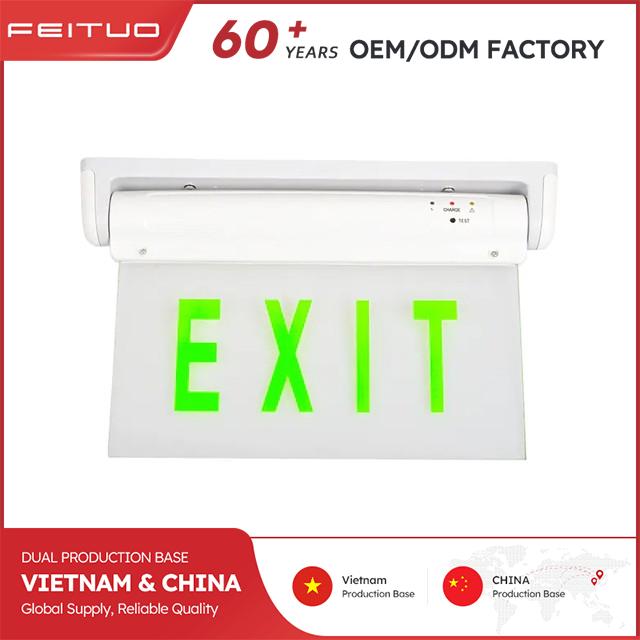
You can confirm UL 924 coverage in three steps. Check the UL Product iQ database. Match the exact model number. Confirm the UL 924 mark on the product label.
A generic UL mark proves little. A brand-level claim proves even less. UL 924 listing applies to specific products, not to a company name. UL 924 also stands apart from UL 1598 general lighting certification. A fixture with UL 1598 alone may not qualify for life-safety egress or battery-backup use.
Treat this as a short checklist. Run it before you order UL listed emergency lights. Each step takes minutes and protects your project from failed inspections.
Ask the manufacturer for the UL 924 file number and exact model numbers for the emergency lights you plan to buy.
Search the UL Product iQ database to confirm the listing covers your exact model and its features.
Compare the product label's model number and UL 924 mark with the listing to ensure they match exactly.
Request a certificate of compliance that names your exact models and the UL 924 standard.
Check with your local authority having jurisdiction (AHJ) to confirm the installation meets local codes.
Start with a written request to the manufacturer. Ask for the UL 924 file number tied to the specific product line you plan to buy. A general company certificate will not help you here. UL assigns file numbers to product categories and listings, so the number must connect to the emergency lighting equipment itself.
Put your request in an email or a formal quote document. Written requests create a paper trail. They also force the manufacturer to name the exact listing instead of offering a vague assurance. A supplier who cannot produce a file number for the product line deserves a closer look before you commit to an order.
Write down the exact model and catalog numbers for every fixture on your list. UL 924 reports must match the exact model you purchase. A similar product in the same line does not count. Manufacturers often sell several variants under one family name, and each variant may carry its own listing details.
Pay attention to suffixes. A suffix may signal a different voltage, battery option, or housing style. Copy the full string exactly as it appears on the quote and the spec sheet. Then keep your request and the manufacturer's response in your purchase file. This record supports your Product iQ search in the next step, and it gives your team a clear reference if a question arises during inspection or delivery.
UL Product iQ is the primary source for this check. Do not rely on a general web search or a page on the manufacturer's website. The database holds the actual certification records, and it lets you search by model, file number, CCN, company name, product type, or keyword.
Gather your identifiers first. You need at least the model number, plus the UL file number, the manufacturer name, the product series, and a short product description. With those in hand, follow this sequence:
Start with the file number, the most precise identifier you hold. Then narrow the results by product category, company, model, or CCN.
If you only have the CCN, search by category first. Then enter the manufacturer's file number or company name to open the certification record.
Run a model search to locate the specific item. Confirm that the exact model, or the applicable model family, sits inside the certification record.
Compare the model designation against the models listed in the record. Check the model together with its attributes, such as materials, sizes, ratings, and configurations. Do not rely on the model name alone.
Confirm that the manufacturer name in the record matches the name on your quote. A mismatch signals a private-label arrangement or a different supplier, and either one deserves a question before you order.
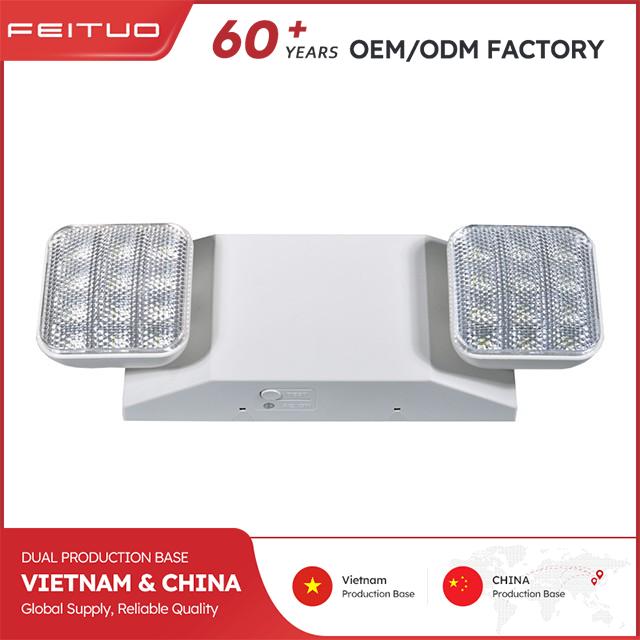
The emergency lights works on either 120 or 277 VAC. Long lasting, low maintenance NiCad battery. Product is UL Listed and meets NFPA 101, OSHA and UL 924 emergency codes.
View Product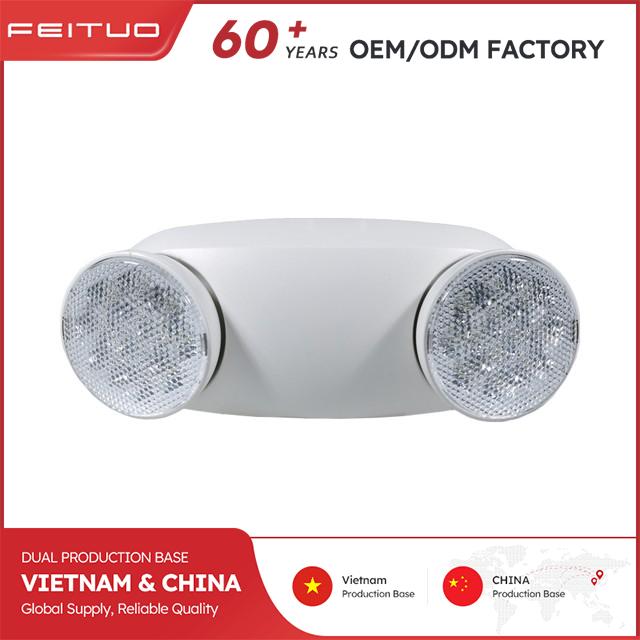
The emergency lights works on either 120 or 277 VAC. Long lasting, low maintenance NiCad battery. Product is UL Listed and meets NFPA 101, OSHA and UL 924 emergency codes.
View Product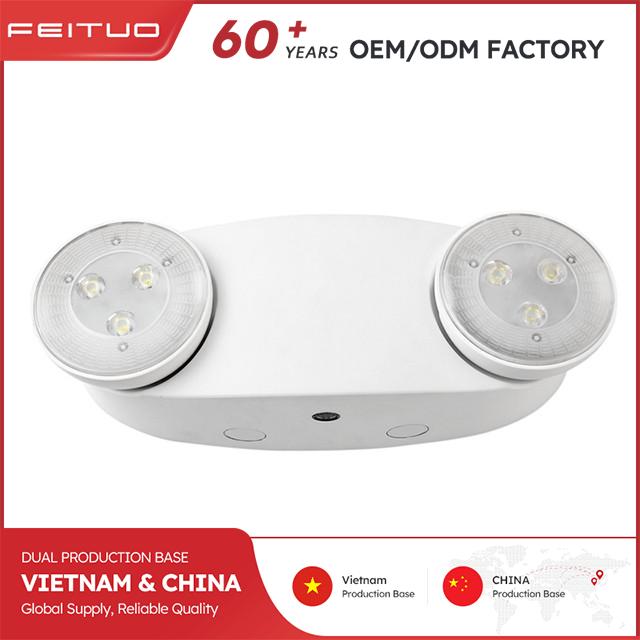
UL-certified dual-head emergency light with 650+ lumens, 90min runtime (6V 4Ah battery), 24hr recharge, wall/ceiling mount, and flame-retardant ABS housing (0℃–40℃).
View ProductThe listing scope must cover the features of the product you plan to buy. UL 924 covers emergency lighting and power equipment, including controls and battery technologies. Read the record for these four attributes:
Battery. Confirm the record names the battery type and the emergency duration.
Charger. Confirm the charging circuit falls inside the listed configuration.
Transfer behavior. Confirm the record covers the automatic transfer arrangement and the voltage options you need.
Automated testing. Confirm self-testing and self-diagnostic functions appear in the scope.
For a UL 924 office egress retrofit, the listed product operates in constant-on / self-testing mode, uses 120/277VAC dual voltage operation, and includes a built-in battery providing 90 minutes of emergency operation. Those are the specific attributes a buyer should find in the listing scope.
A fixture bearing only a UL 1598 mark is not necessarily certified for life-safety egress, exit sign, or battery-backup use. UL 1598 addresses general luminaire safety. UL 924 validates emergency functionality and performance. According to UL Standards & Engagement, UL 924 does not stand alone for all equipment in its scope, and basic protection against fire, electric shock, and injury comes from standards such as UL 1598. Both marks can appear on one fixture, and each one answers a different question. When you evaluate UL listed emergency lights, ask for the UL 924 record specifically.
FEITUO is a professional manufacturer for UL924 emergency lights & exit signs. We have dual production bases in Ningbo China & Vietnam, provide UL certified twin-head emergency lights, exit combo signs, IP65 waterproof emergency lighting, support OEM & ODM, DDP delivery for North America market.
The label on the fixture is your last physical checkpoint before the order ships. Pull the product label and compare its model number to the Product iQ listing character by character. Read every digit, letter, and hyphen aloud if that helps. A single transposed character can point to a different product with a different listing status. Labels sit in different places depending on the housing, so check the back plate, the inside of the door, and the driver compartment on a sample unit.
Suffixes deserve special attention. Manufacturers use suffixes to signal voltage options, battery configurations, housing styles, and testing features. A model ending in one code may ship with a universal-voltage driver, while the same base model with another code may carry a different battery pack. Neither variant automatically inherits the other's listing. Write the full string from the label next to the full string from Product iQ. If the two do not align exactly, stop and ask the manufacturer to explain the difference in writing. Photograph the label and attach the image to your purchase record. That photo settles disputes quickly if a delivered unit differs from the approved submittal.
The label should carry a UL 924 mark, not just a generic UL mark. A generic mark tells you the product passed some safety evaluation. It does not tell you which standard applied. Look for the UL 924 designation itself, printed on the label or in the marking text. Some fixtures carry both UL 1598 and UL 924 marks, and each one answers a separate question about the product. A label with no standard reference at all is a red flag worth raising before you accept the shipment. Ask for a close-up photo of the label before the order ships.
Confirm a 90-minute discharge capability as well. This duration is a key performance requirement associated with UL 924 listed emergency lighting. The fixture must deliver emergency illumination for the full rated period after power loss. Ask the manufacturer for the discharge test data tied to your exact model. A self-testing unit should log these results automatically, and that log becomes useful evidence during inspection. Self-testing LED units rated for 90+ minutes of runtime, for example, produce test records that support that claim.
You can also use UL's published overview of emergency lighting testing and certification (UL 924) as a reference. UL hosts this overview at https://www.ul.com/services/emergency-lighting-testing-and-certification. The page describes what the standard covers and how UL tests emergency lighting products. Build your specification from that reference, then compare each manufacturer's claims for UL listed emergency lights against it. This approach gives you a neutral benchmark instead of a sales sheet. The overview also helps you write clearer questions for the manufacturer.
When you evaluate UL listed emergency lights, treat the label as a claim and the listing as the proof. The two must agree. Buyers who skip this comparison often discover the mismatch at inspection, when replacement is expensive and slow. A careful label check takes a few minutes and closes the gap between what you ordered and what arrived. Run this check on every model in the order, not just the first one.
Ask the manufacturer for a certificate of compliance for your order. The document should name the manufacturer, the UL 924 file number, the exact model numbers you are buying, and the standard covered. Read it against your quote line by line. The model strings must match, including every suffix.
A certificate that lists only a brand name or a general UL mark does not prove the emergency function was evaluated. Look for the words "UL 924" on the page. Confirm with the manufacturer that the product is intended for emergency use, not auxiliary use. Then tie the spec sheet, the submittal, and the order to the same part number. That chain shows the certification applies to the exact product you will receive.
UL 924 "has extra investigatory steps beyond general lighting certifications." A general UL mark on a fixture is not the same thing as UL 924 certification of its emergency function.
The AHJ is the local official or agency that interprets and enforces the adopted codes. That may be the fire marshal or the building department. Confirm UL 924 listing and NFPA 101 compliance for the specific product and application. Do not rely on a generic UL mark for this step.
Gather project details before you contact the AHJ. Useful items include the occupancy classification, building age, floor plan, occupant load, exit arrangement, and fire-protection systems. Then ask four questions:
Which edition of the applicable code has the local jurisdiction adopted?
Which occupancy-specific requirements apply to this building?
Do any state or local amendments change the requirement?
Does the AHJ impose any additional requirements beyond the adopted code?
Bring product cut sheets, the UL 924 listing information, installation instructions, and testing records. A UL 924 listing alone does not prove the complete installation complies. Compliance depends on the full system delivering required illumination, duration, automatic operation, and testing performance. The AHJ can confirm whether your UL listed emergency lights meet local code requirements before you place the order.
Run the checks in order. Get the file number and exact model numbers. Search Product iQ. Match the label. Confirm the UL 924 mark and the 90-minute rating. Request the certificate of compliance. Ask the AHJ when local rules apply.
Do this before you buy. A UL 924 label on a spec sheet does not guarantee compliance on its own. Inspectors often fail systems that cannot hold 90 minutes during annual testing. Catching that risk at the quote stage costs nothing.
A few minutes of cross-checking protects your project. You avoid failed inspections, rushed replacements, and compliance risk. Verify your UL listed emergency lights first, then place the order.
No. UL 1598 addresses general luminaire safety. UL 924 validates emergency function and performance. A fixture can carry both marks, and each one answers a different question. Ask for the UL 924 record specifically when you buy emergency lighting.
Stop and ask the manufacturer to explain the difference in writing. A suffix can signal a different voltage, battery, or housing option. That variant may not share the listing. Photograph the label and keep it with your purchase record.
No. A website page is marketing material. UL Product iQ holds the actual certification records. Search by file number, then by exact model, and confirm the manufacturer name matches your quote.
Each step takes minutes. You request the file number, search Product iQ, compare the label, and request the certificate. Run the full chain before you place the order, not after delivery.
The authority having jurisdiction, often the fire marshal or building department. That office interprets the adopted code for your building. Bring cut sheets, listing information, and test records. A UL 924 listing alone does not prove the complete installation complies.

Phone: 0086-13566557272
Whatsapp: +86-13566557272
ADD: No.546 Qiye Road, Zhouxiang Town, Cixi, Zhejiang, China
ADD: Within Dinh Vu - Cat Hai Economic Zone, Dong Hai 2 Ward, Hai An District, Hai Phong City, Viet Nam
Customer Message


 Dual Head Emergency Light
 LED Emergency Light Remote Head
 Twin Spot Emergency Light
 Rechargeable LED Emergency Light
 Emergency Downlight
 Fire Exit Sign
 Running Man Exit Sign
 SALIDA Exit Signs
 SAÍDA Exit Signs
 Recessed Exit Sign
 UL Listed Exit Light
 Customized EXIT SIGN
 Power & Lighting Exit Sign
 Mounting & Housing Exit Sign
 Self Test Exit Sign
 Directional exit sign
 Custom Legends exit sign
 Custom Acrylic Signs
 LED Emergency Inverter
 Emergency Ballast
 Emergency Battery