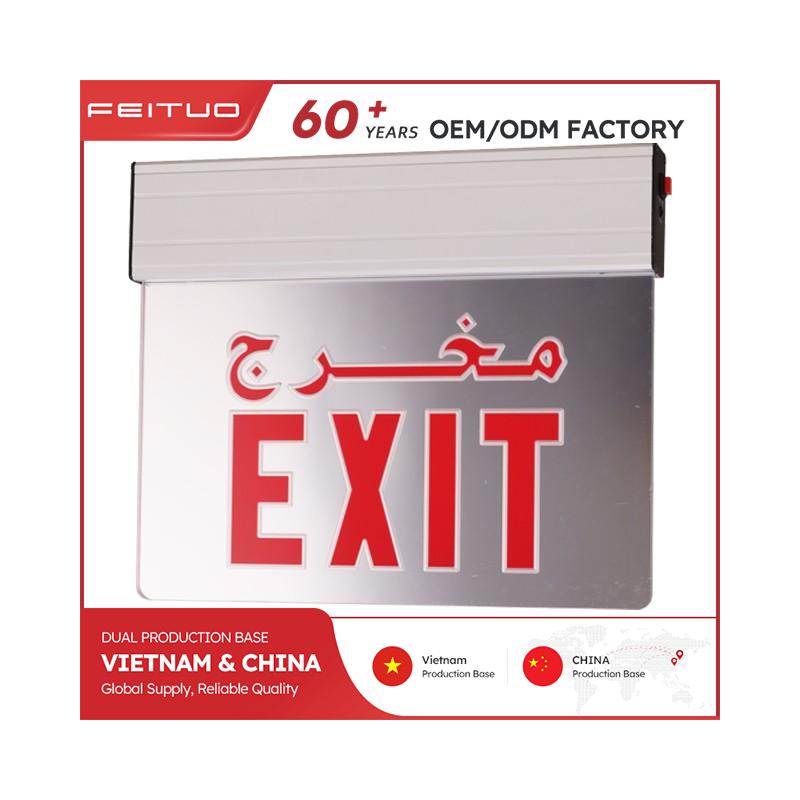
Emergency exit signs are critical safety devices designed to guide occupants to safety during emergencies such as fires, power outages, or other crises. These illuminated signs ensure clear visibility of escape routes, even in low-light conditions, and are legally required in most commercial, industrial, and public buildings. Proper installation of emergency exit signs is not just a regulatory obligation but a life-saving measure. This article provides a comprehensive guide to installing emergency exit signs, covering step-by-step methods, key considerations, and best practices to ensure compliance and functionality.
Part 1: How to Install Emergency Exit Sign
Installing an emergency exit sign requires careful planning, adherence to safety codes, and the use of appropriate tools. Below is a structured approach to ensure a successful installation:
1.Determine Placement Locations
Before installation, identify optimal locations for emergency exit signs based on building layout and safety regulations. Key guidelines include:
Visibility: Signs must be visible from a distance of at least 100 feet (30 meters) in normal lighting and clearly discernible in smoke or darkness.
Height: Mount signs 6–8 feet above the floor to avoid obstructions and ensure they are at eye level for most occupants.
Pathways: Place signs above or near exit doors, along corridors, stairwells, and intersections to mark escape routes.
Obstruction-Free: Ensure signs are not blocked by furniture, decorations, or equipment.
2.Choose the Right Type of Emergency Exit Sign
Select signs that comply with local regulations (e.g., OSHA in the U.S., NFPA 101, or IBC standards). Common types include:
Electrically Lit Signs: Connected to the building’s power supply with a battery backup for emergencies.
Photoluminescent Signs: Absorb light and glow in the dark; ideal for areas with limited electrical access.
Combination Signs: Integrate both illuminated and photoluminescent features for redundancy.
3.Gather Tools and Materials
Prepare the following tools and materials:
Emergency exit sign kit (including mounting hardware)
Drill and screws (for wall or ceiling mounting)
Screwdriver or wrench
Voltage tester (for electrically lit signs)
Wire strippers and connectors (if wiring is required)
Ladder or scaffolding (for high placements)

4.Install the Emergency Exit Sign
Mark the mounting location using a level to ensure the sign is straight.
Drill holes for screws or anchors, aligning them with the sign’s mounting brackets.
Secure the sign to the wall using screws, ensuring it is firmly attached.
If the sign is electrically lit, connect the wiring to the building’s power supply and test the backup battery.
For Ceiling Mounted Exit Signs:
Use a ladder to access the ceiling. Ensure the area can support the sign’s weight.
Attach the mounting bracket to ceiling joists or a secure surface.
Hang the sign from the bracket and connect any electrical components.
Verify the sign hangs level and is not obstructed by ceiling tiles or fixtures.
For Photoluminescent Exit Signs:
Clean the mounting surface to ensure adhesion.
Peel the backing off the sign and press it firmly onto the wall or door.
Avoid installing near direct sunlight, which may degrade the material over time.

5.Test the Emergency Exit Sign
After installation:
For electrically lit signs: Simulate a power outage to confirm the backup battery activates the sign.
For all signs: Check visibility from multiple angles and distances.
Replace batteries or bulbs immediately if the sign fails to illuminate.
Part 2: Key Considerations When Installing Emergency Exit Sign
To ensure the effectiveness and longevity of emergency exit signs, follow these precautions:
1.Comply with Local Codes
Regulations vary by region. For example:
The U.S. requires signs to display the word “EXIT” in red or green letters at least 6 inches high.
The UK mandates a running man symbol (ISO 7010) for international compliance.
Canada specifies bilingual signs (“Sortie/Exit”) in certain provinces.
2.Environmental Factors
Humidity: Avoid installing signs in damp areas unless they are rated for wet conditions.
Temperature: Extreme cold or heat may affect battery performance in electrically lit signs.
Vandalism: Place signs out of reach or use tamper-proof screws in high-risk areas.
3.Maintenance Access
Ensure signs are installed in locations that allow easy access for battery replacements, bulb changes, or cleaning.
Avoid mounting signs behind doors or in cramped spaces where maintenance would be difficult.
4.Integration with Fire Alarm Systems
In some buildings, emergency exit signs are linked to fire alarms to activate simultaneously during an evacuation. Consult a professional to ensure compatibility.
Part 3: Conclusion
Installing emergency exit signs is a straightforward yet vital task that demands attention to detail and compliance with safety standards. By selecting the right type of sign, placing it strategically, and following proper installation procedures, building owners can create a safer environment for occupants. Regular testing and maintenance further ensure these signs function reliably during emergencies.
Remember, the primary goal of an emergency exit sign is to save lives by providing clear, unobstructed guidance to safety. Neglecting installation guidelines or using substandard products can lead to regulatory penalties and, more critically, endanger lives. Whether you are upgrading existing signs or installing new ones, prioritize quality, visibility, and adherence to codes. With careful planning and execution, your emergency exit signs will serve as a reliable beacon of safety for years to come.
By following this guide, you can confidently install emergency exit signs that meet legal requirements and protect people in critical situations. Always consult local authorities or a safety expert if you are unsure about specific regulations or technical aspects of the installation process.

Phone: 0086-13566557272
Whatsapp: +86-13566557272
ADD: No.546 Qiye Road, Zhouxiang Town, Cixi, Zhejiang, China
ADD: Within Dinh Vu - Cat Hai Economic Zone, Dong Hai 2 Ward, Hai An District, Hai Phong City, Viet Nam
Customer Message


 Dual Head Emergency Light
 LED Emergency Light Remote Head
 Twin Spot Emergency Light
 Rechargeable LED Emergency Light
 Emergency Downlight
 Fire Exit Sign
 Running Man Exit Sign
 SALIDA Exit Signs
 SAÍDA Exit Signs
 Recessed Exit Sign
 UL Listed Exit Light
 Customized EXIT SIGN
 Power & Lighting Exit Sign
 Mounting & Housing Exit Sign
 Self Test Exit Sign
  Directional exit sign
 Custom Legends exit sign
 Custom Acrylic Signs
 LED Emergency Inverter
 Emergency Ballast
 Emergency Battery